One Kept the Stone, One Kept the Hole
A million cubic metres of Chinese sandstone went somewhere and nobody can find it. Fifty-tonne Peruvian blocks are still lying beside the road, exactly where the hauling stopped.
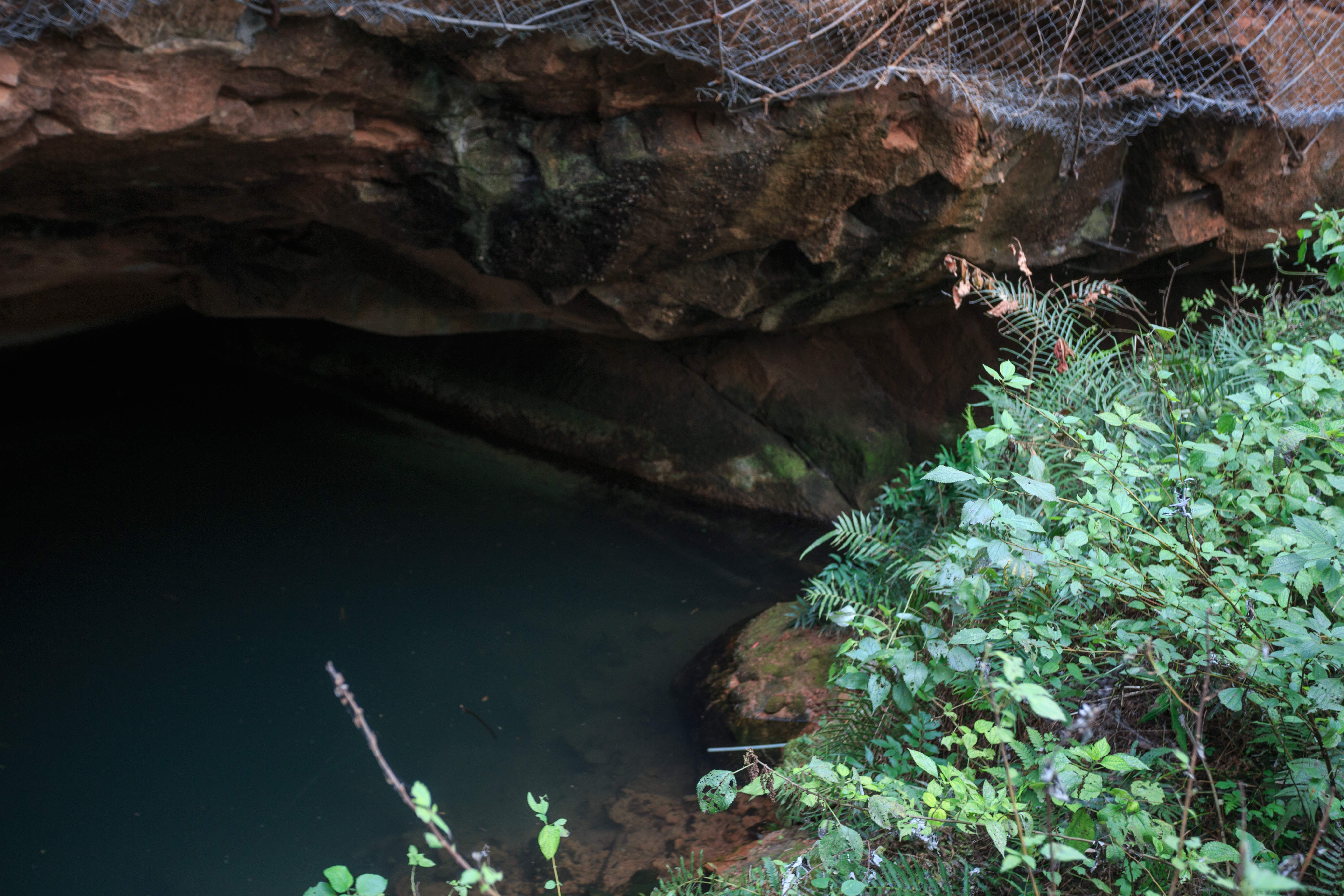
In June 1992, four farmers in Zhejiang set about pumping the water out of a village fish pond, and the water kept going down past the point where a pond floor should have been. Underneath was a hall. Then another, and eventually two dozen of them, some with floors over a thousand square metres and ceilings arching thirty metres up — around a million cubic metres of sandstone cut out by hand and carried away. Nobody has ever found where it went.
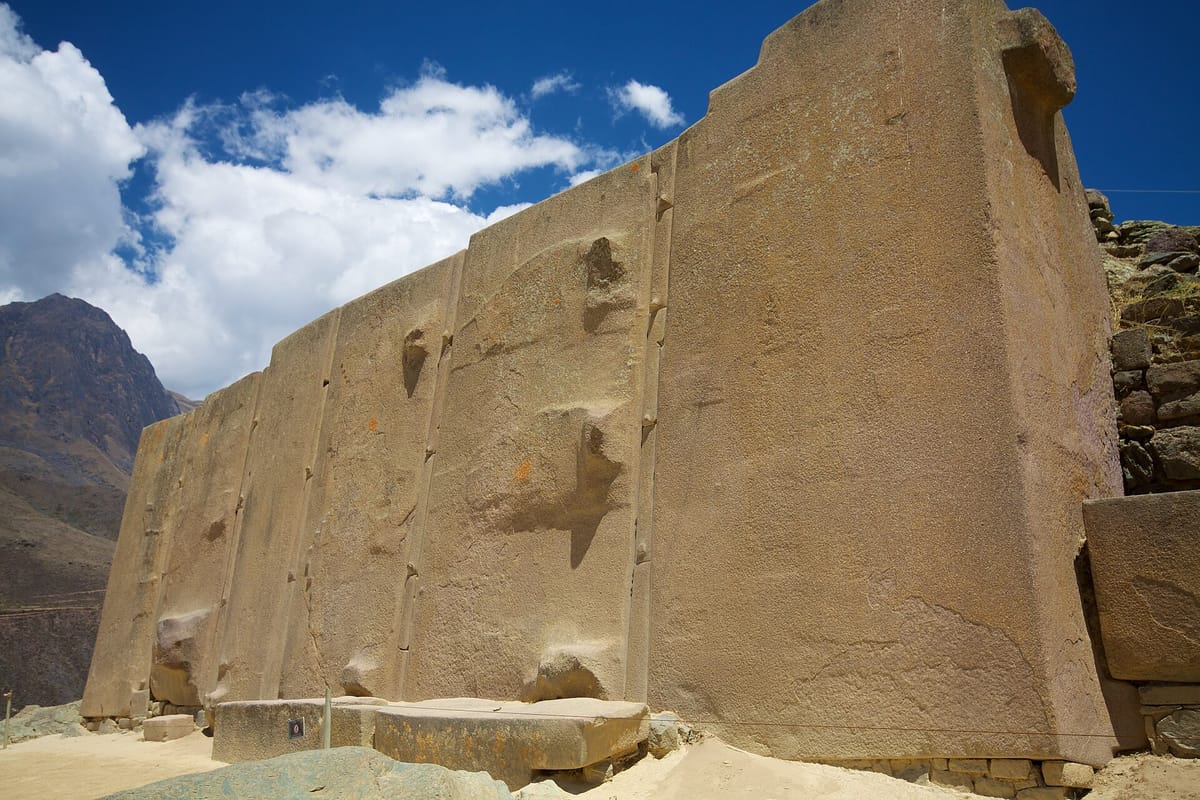
On a mountainside above the Urubamba in Peru, the Inca had the opposite kind of afterlife. The rose rhyolite for Ollantaytambo’s Temple of the Sun came from Kachiqhata, five kilometres off and across a river, and much of it never arrived. Fifty-tonne blocks lie along the haul route where the effort ran out. The locals call them piedras cansadas — tired stones.
Both sites are unusually talkative about method. At Longyou every surface carries courses of parallel chisel strokes, bands about sixty centimetres wide, struck at roughly sixty degrees, identical across all twenty-four chambers — the signature of trained crews working to a standard, though not one chisel has ever been recovered. At Ollantaytambo you can still walk it: quarry faces where blocks were split along the rock’s own fracture planes, roughed down on the spot to cut the weight, then clay-and-gravel roadbeds, and beneath at least one abandoned megalith, the wooden rollers still lying where they were left. Neither had metal that mattered, wheels, or draft animals. Both had thousands of people and someone competent enough to organise them.
They never met — 17,899 kilometres and some sixteen centuries apart, with an ocean and no thread of contact between them. What they share is the constraint, and what it forces. And what each one lost is exactly what the other kept. Peru still has the stone and cannot finish the wall. China still has the hole and cannot find the stone, or the reason, or even the memory of who dug it.
Two hillsides, both of them missing the same half of the sentence.
Read the full studies: Longyou CavesOllantaytambo