The Moai of Rapa Nui
How did a small Polynesian island society carve, move, and raise nearly 900 multi-tonne stone figures, some over 80 tonnes, across miles of rugged terrain without wheels, metal tools, or draft animals?
Why this rating?
- Construction difficulty
- 4/5
- Method uncertainty
- 4/5
- Capability gap
- 3/5
- Open questions
- 4/5
Carving and the now well-replicated upright 'walking' transport are archaeologically documented in detail, but the exact mix of methods used for the largest statues, the logistics of raising a multi-tonne moai onto a finished ahu, and the reasons carving eventually stopped remain open and less experimentally tested than the walking phase itself.
Overview
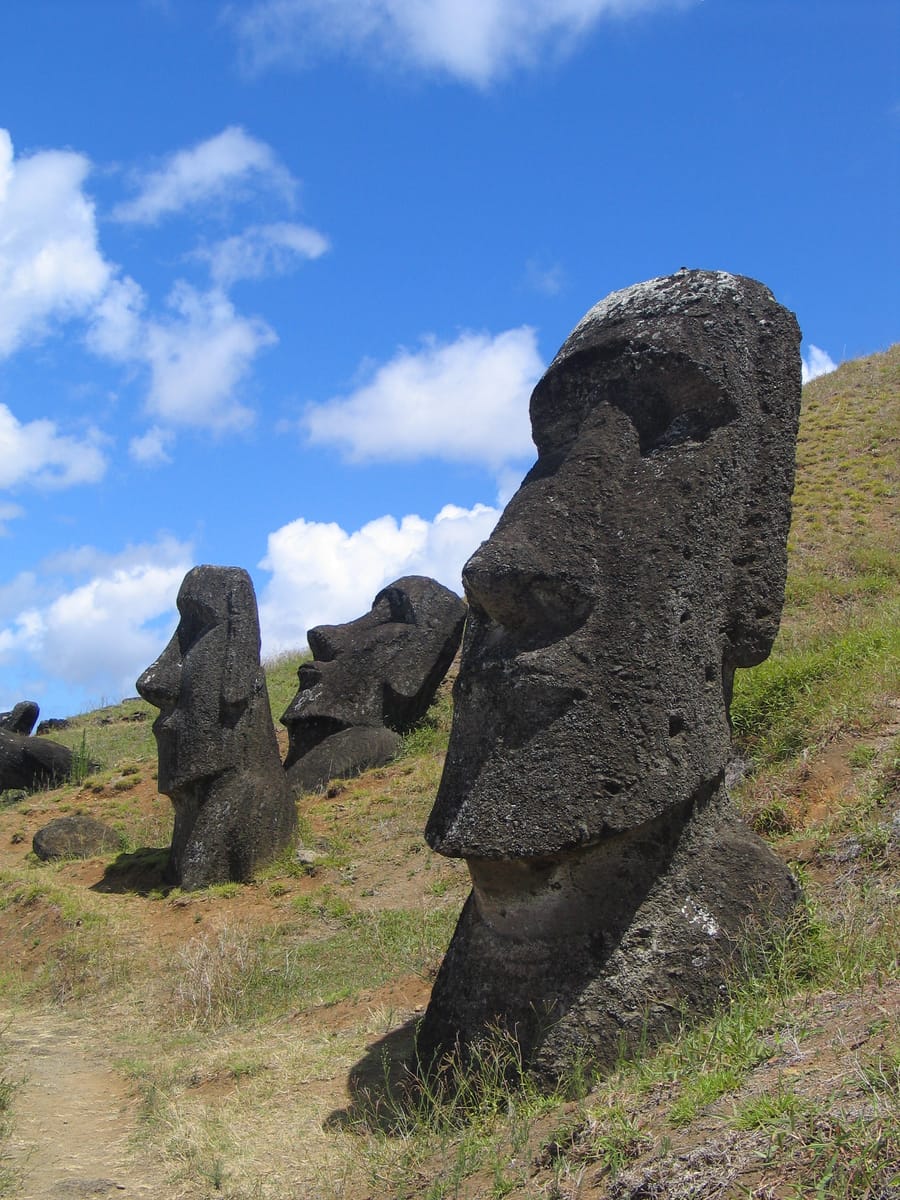
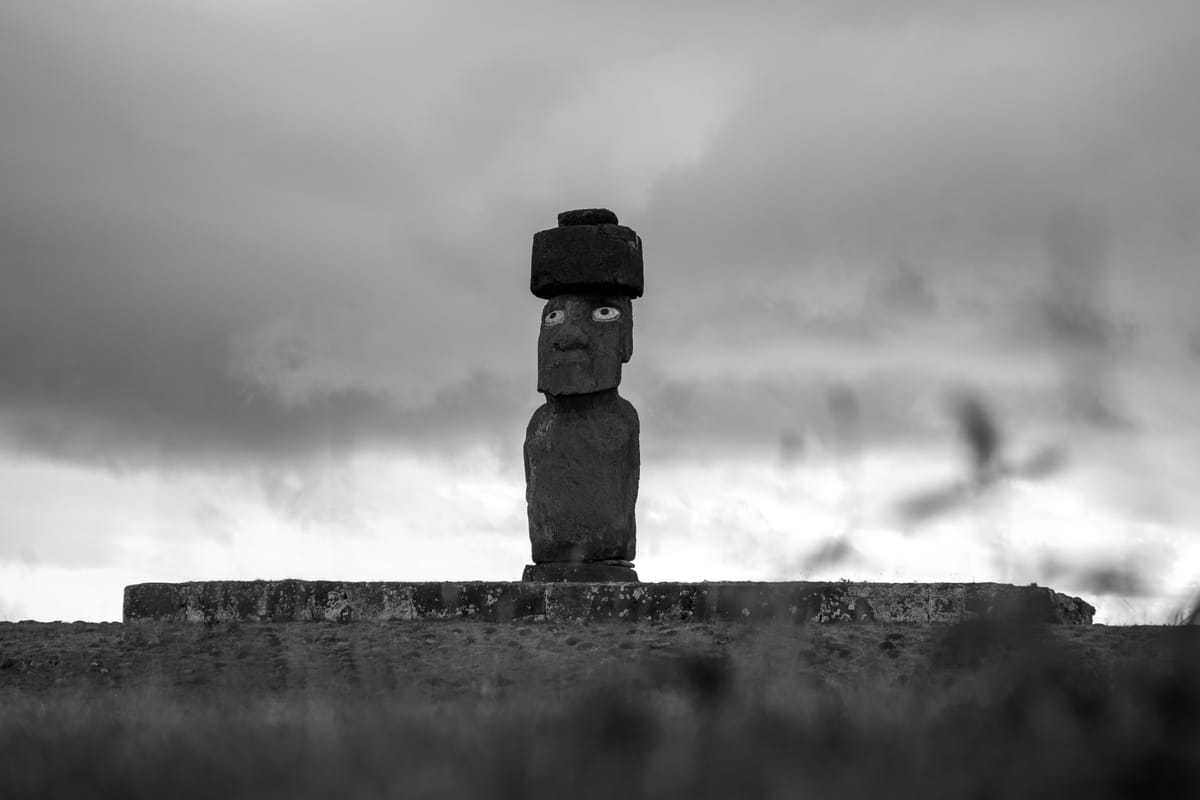
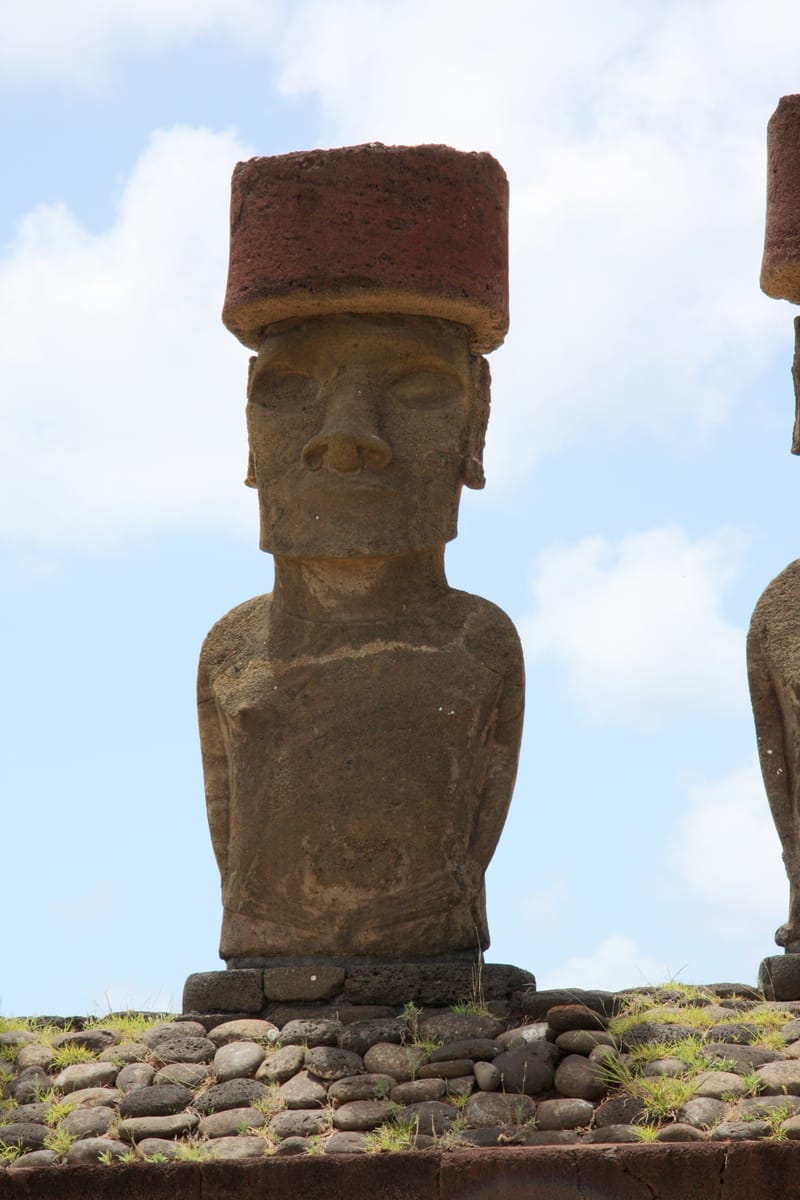
On Rapa Nui (Easter Island), one of the most isolated inhabited places on Earth — a volcanic speck in the southeastern Pacific over 3,500 km from the coast of Chile, the country that administers it — stand the moai: nearly 900 monolithic human figures carved by the island’s Polynesian inhabitants, mostly between around 1250 and 1500 CE. Carved almost entirely from tuff, a compressed volcanic ash quarried at a single site called Rano Raraku, the moai represent deified ancestors (their Rapa Nui name for the finished statues, aringa ora, means “living faces”). Most were raised on stone platforms called ahu, positioned along the coastline facing inland over the villages and communities they were believed to watch over, rather than out to sea as popularly imagined. An average moai stands about 4 meters tall and weighs around 12 to 13 tonnes; the largest ever successfully erected, Paro, reached nearly 10 meters and roughly 82 tonnes; and a single unfinished giant still lying in the quarry bedrock, if completed, would have stood about 21 meters tall and weighed well over 100 tonnes. Later moai were topped with pukao, cylindrical “topknots” of red volcanic scoria quarried separately at Puna Pau, and a few were fitted with inlaid eyes of white coral and obsidian or red scoria pupils, giving them, when complete, a startlingly lifelike gaze. Rapa Nui National Park was inscribed as a UNESCO World Heritage Site in 1995 in recognition of this extraordinary and self-contained tradition of monumental sculpture, built by a Polynesian society working with no metal tools, no wheels, and no draft animals.
The Structure
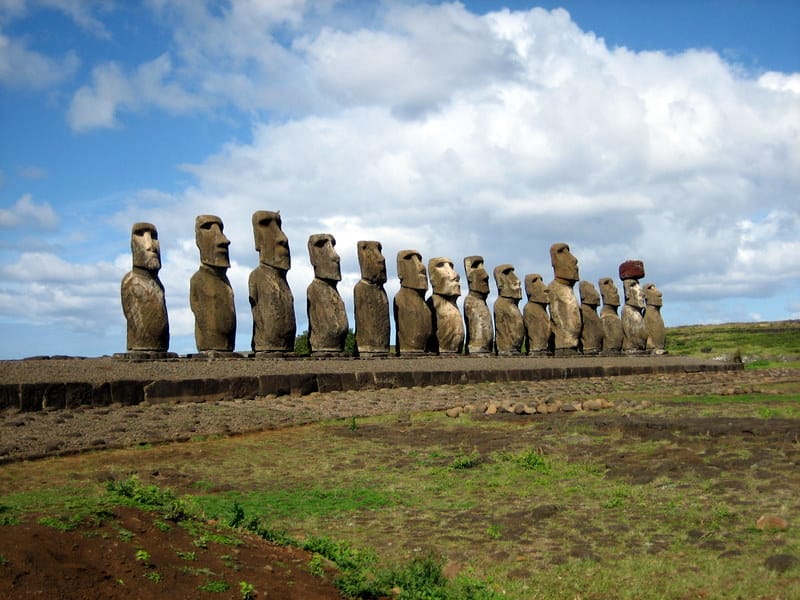
Rapa Nui was settled by Eastern Polynesian voyagers, most estimates now place this at around 1200 CE, arriving by ocean-going canoe after one of the longest deliberate sea crossings in human history. Over the following centuries, the islanders developed a distinct culture built around ancestor veneration expressed through moai and ahu. More than 900 moai have been catalogued: roughly half still sit at or near the Rano Raraku quarry where they were carved, either finished and awaiting transport or abandoned partway through; the rest were successfully moved, in some cases many kilometers, to ahu platforms distributed around the island’s coastline. Around 300 ahu are known in total, ranging from simple platforms to elaborate constructions like Ahu Tongariki, the largest ever built, which holds 15 re-erected moai in a single row facing inland. A minority of the later moai, associated with the most complex and highest-status ahu, carry pukao and would originally have had inset eyes, both features generally understood as later refinements added as the tradition matured, roughly across the 15th and 16th centuries. Moai production and erection continued for several centuries before stopping, most researchers place the end of active carving and toppling of standing statues somewhere between the 1600s and the 1830s, with all previously standing moai reported down by the time of sustained European documentation in the mid-19th century, likely from a combination of internal conflict, the rise of a new religious and political system (the Birdman cult centered on nearby Orongo), and the severe disruptions that followed European contact from 1722 onward, including introduced disease and 19th-century Peruvian slave raids that devastated the population.
How Was It Built?
Carving took place directly in the volcanic tuff of the Rano Raraku crater, where sculptors used hand picks called toki, chipped from hard basalt, to outline and free each figure from the rock face while it still lay flat, leaving a narrow keel of stone connecting the statue’s back to the bedrock. Once the front and sides were finished, the keel was cut and the moai was lowered, often into a prepared pit, so carvers could finish the back and smooth the whole surface, typically with volcanic pumice. Unfinished statues still embedded in the quarry walls, including the roughly 21-meter giant nicknamed “El Gigante,” preserve this process mid-stage and let archaeologists reconstruct each step in detail.
How completed moai were then hauled, in some cases many kilometers, from the quarry to their ahu has long been debated, and Rapa Nui oral tradition holds that the statues themselves “walked” to their destinations. For decades, mainstream archaeology favored more conventional explanations: statues dragged horizontally on wooden sledges over log rollers, requiring large labor teams. But a substantial body of research led by archaeologists Terry Hunt and Carl Lipo has built strong experimental and physical support for a literal reading of the “walking” tradition. Rapa Nui moai destined for transport have wide, D-shaped bases and a deliberate forward lean, features that make an upright statue unstable when still but allow it to be rocked side to side and walked forward using ropes, much as a person can “walk” a heavy refrigerator by rocking and pivoting it. In field trials, including a widely reported 2025 study, teams of under 20 people moved a multi-tonne replica moai upright over open ground in this way, and the ancient roads leading from the quarry show wear patterns and a concave profile consistent with statues rocking along them rather than being dragged flat. Researchers now generally think the islanders used a mix of methods depending on terrain and statue size, walking upright statues along prepared roads for longer hauls, with sledges, rollers, levers, and ropes also playing a role, rather than a single universal technique.
The Mainstream View
Archaeologists agree, with strong and multiply corroborated evidence, that the moai were designed, carved, transported, and raised entirely by the Rapa Nui people themselves, using stone tools, rope made from local plant fiber, timber, and coordinated human labor, with no need to invoke lost technology or outside builders. The quarry at Rano Raraku preserves the entire production sequence from outline to unfinished giant to polished, completed statue, directly tying tool marks, toki finds, and half-carved figures to the finished moai standing on ahu around the island. The “walking” transport hypothesis is now well supported by converging lines of evidence: the distinctive D-shaped bases and forward lean of “road moai,” the physics and full-scale experimental replication of upright rocking transport, wear patterns on the ancient roads themselves, and consistency with the islanders’ own oral tradition that the statues walked. Radiocarbon dating of quarry and habitation sites, combined with analysis of tool marks and construction sequences at various ahu, lets researchers place the main period of moai production at roughly 1250 to 1500 CE, with pukao and inlaid eyes added as later elaborations. Equally well-supported today, though it runs against the popular narrative for decades, is a more nuanced view of the island’s broader history: newer archaeological and paleoenvironmental research has challenged the older “ecocide” story of a self-inflicted population collapse driven by reckless deforestation, finding evidence instead for a smaller, more stable population that adapted its land use over time, with the most severe demographic and social disruption arriving later, through European-introduced disease and 19th-century slave raiding rather than a pre-contact collapse.
The Open Case
The core “how” of the moai is no longer a genuine mystery: the quarrying, carving, and (very likely) upright walking transport of the statues are documented archaeologically and have been reproduced experimentally. What remains legitimately open is finer-grained. Researchers still debate the exact mix of transport methods used for different statues, roads, and terrain, some of the largest and heaviest moai, like the 86-tonne giant at Ahu Tongariki, may have required different handling than the smaller “road moai” used in walking trials, and the full logistics of raising a multi-tonne statue upright onto a finished ahu platform, likely using timber levers and gradually built-up stone ramps, is less experimentally tested than the walking phase itself. The precise social and religious meaning encoded in individual moai, why particular ahu received pukao and eyes while most did not, how status, lineage, and ritual function shaped which statues were finished and moved first, is still actively researched and only partly resolved. And the reasons carving and transport eventually stopped altogether, sometime between the 1600s and the early 19th century, remain debated among competing and possibly overlapping explanations: internal conflict, a religious shift toward the Birdman cult, resource pressures, and the catastrophic impact of European contact. None of this argues for aliens or lost technology, the Rapa Nui people’s own ingenuity, social organization, and accumulated engineering knowledge fully account for what the island’s quarries and roads show. But the finer texture of how, exactly, an isolated Polynesian society sustained this effort across some 250 years, and why it ultimately ceased, remains a live and genuinely open area of study.
Sources
- UNESCO World Heritage Centre — Rapa Nui National Park
- Wikipedia — Moai
- ScienceDaily — Scientists just proved the moai could walk, solving a 500-year mystery
- Binghamton University — Easter Island's statues actually 'walked' — and physics backs it up
- Lamont-Doherty Earth Observatory — Study Challenges Popular Idea That Easter Islanders Committed 'Ecocide'
- Easter Island Travel — Moai Statues
Connected findings
- The Hills That Were Carved Into People — Ten thousand years and sixteen thousand kilometres apart, two peoples with no metal reached the same conclusion: don't move the stone to carve it. Carve it where it lies.
- The Impossible Delivery — An island with no wheels moved an 80-tonne statue on foot. A kingdom with no draft animals floated a 700-tonne one down a river. Neither had met the other.
On screen
- The Statues You Keep Carving — Most games treat a wonder as one monument. The moai are the exception — games make you build them over and over, exactly like the islanders did.
Gallery