The Stones Too Big to Move
Three civilizations, twenty-nine centuries apart, each pushed stone-moving to its exact breaking point — and left the proof lying exactly where it failed.
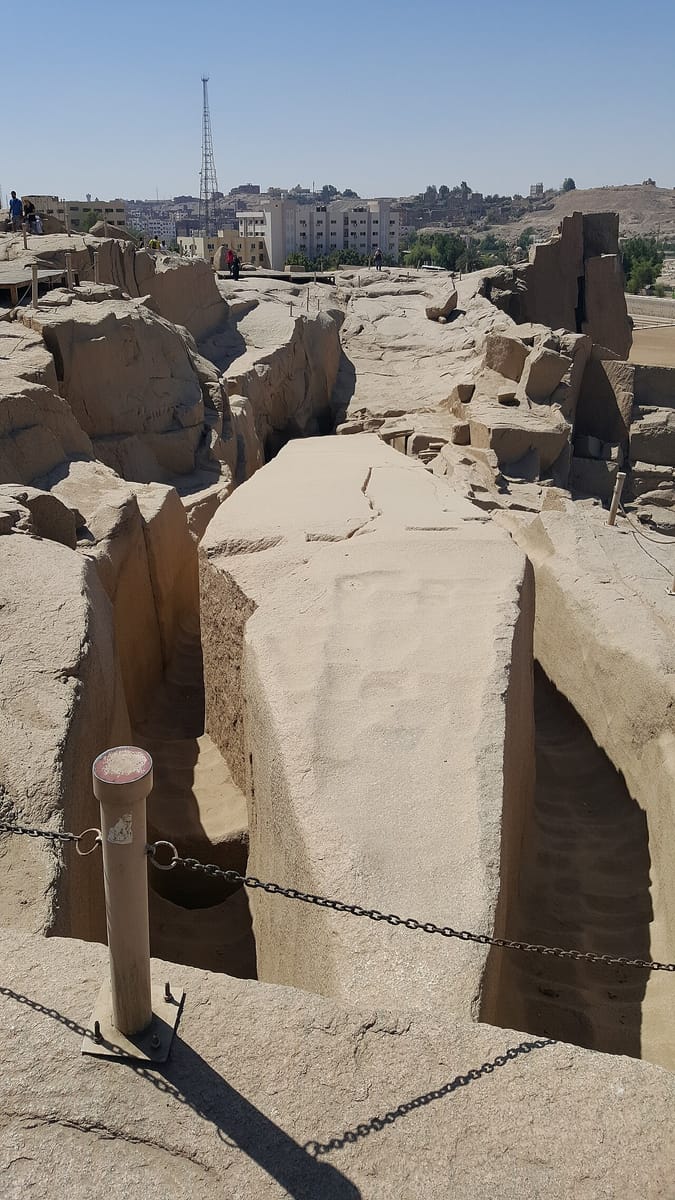
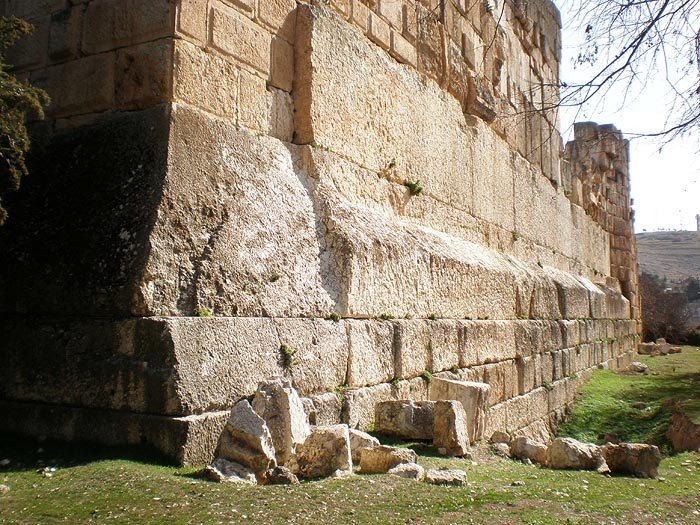
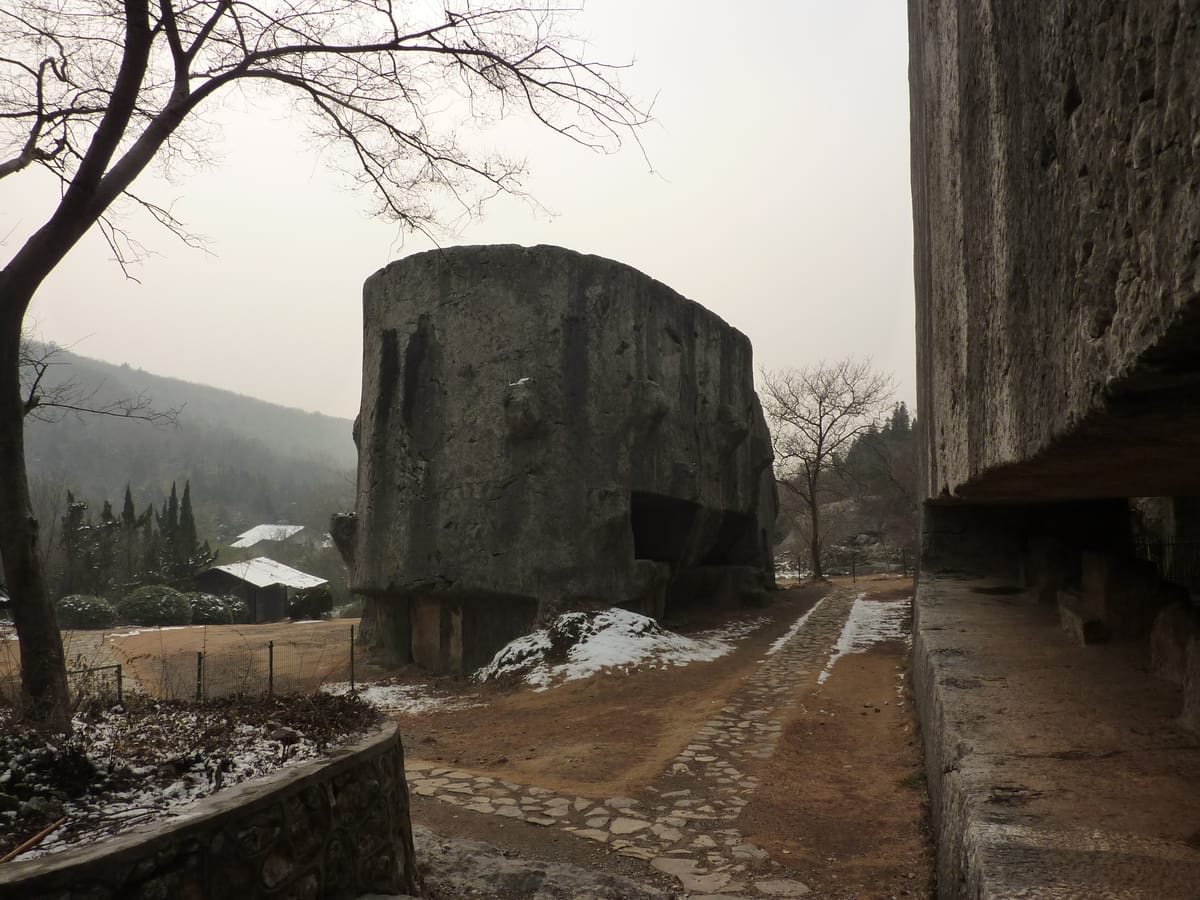
On a wooded hillside east of Nanjing lies a slab of limestone the size of a city block, still half-fused to the mountain it was cut from — a stele base estimated at 16,250 tonnes. Ming engineers spent years freeing it and two companion pieces, then abandoned all three once it was clear the stones could never be dragged fifteen kilometers to an emperor’s tomb. They have lain there, unmoved, for six centuries. It is not alone. Twenty-nine centuries earlier, in southern Egypt, quarrymen abandoned a nearly finished obelisk still gripped by its own bedrock. In a Lebanese hillside, Roman stonecutters walked away from a 1,650-tonne block, left exactly where the cutting stopped. Three stones, three empires, three continents — each one proof that someone’s ambition outran what they could actually deliver.
Each attempt carries its own signature. At Aswan, workers pounding dolerite hammerstones against granite trenched out an obelisk meant to dwarf anything Egypt had ever raised — 1,090 tonnes, nearly 42 meters — until a crack running through the stone itself stopped the work mid-cut. At Baalbek, Roman crews had already moved the extraordinary: three 800-tonne blocks sit fitted into the Temple of Jupiter’s podium wall. But in the same quarry, a still-larger block — found in 2014, some 1,650 tonnes — was cut and dressed on three sides, then left; even veterans of the 800-tonne set judged it one block too far. At Yangshan, the ambition was grandest: a single stele in three pieces, over 31,000 tonnes combined, meant to stand 73 meters over an emperor’s tomb. All three were carved nearly free of the rock. None of the three sites’ most ambitious blocks ever moved an inch.
None of these builders ever heard of one another. New Kingdom Egypt, Roman Syria, and Ming China share no lineage, no trade route, no borrowed blueprint — Hatshepsut’s stonemasons were dust for a thousand years before Rome existed, and Rome had been gone for another thousand by the time Yongle’s engineers picked up their tools at Yangshan. Yet each civilization, working alone, pushed stone-moving to the exact edge of what muscle, rope, and timber could deliver — and each stopped at the same wall: not a shared number, but a shared physics, the same arithmetic of dead weight no manpower could out-argue. They didn’t copy an answer; they found the identical boundary alone. Once you’ve seen one abandoned megalith, you can’t stop seeing that wall.
Read the full studies: The Unfinished Obelisk of AswanThe Baalbek TrilithonThe Yangshan Quarry Stele