The Secret of the Pyramids Was a Truck Bearing
Imhotep froze a palace of reeds and matting into limestone for a dead king. Four and a half thousand years later a man in Florida carved himself a stone rocking chair, and told everyone he had worked out how the pyramids were done.
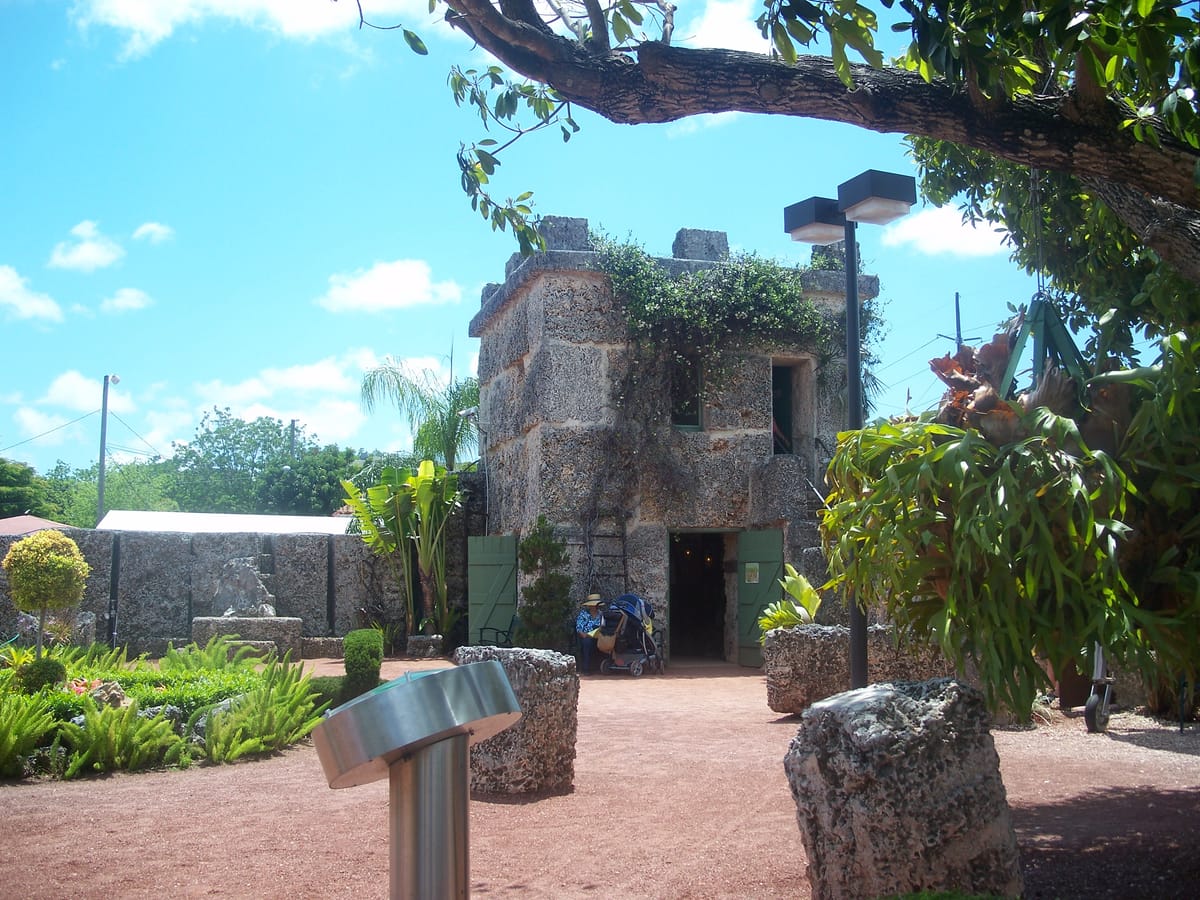
In a yard in Homestead, Florida, there is a heart-shaped table, a rocking chair, a crescent-moon bathtub and a barbecue pit. All of them are cut from limestone. One man made them, mostly at night, between 1923 and 1951, and he would not let anyone watch.
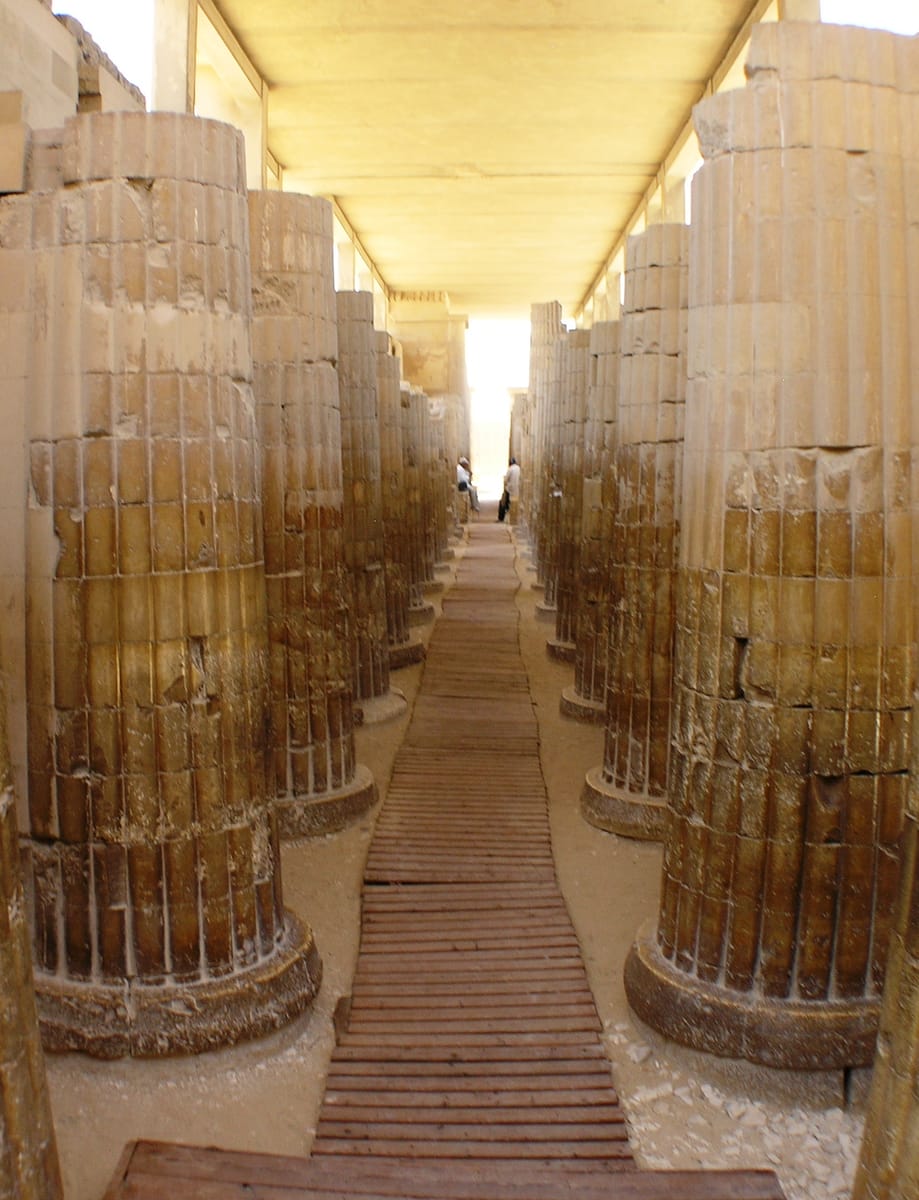
Four and a half thousand years earlier and ten thousand kilometres away, Imhotep was doing something uncomfortably similar at Saqqara. The complex around Djoser’s Step Pyramid is full of limestone pretending to be other materials: columns carved as bundles of plant stems, ceilings cut to imitate palm logs, walls panelled like woven matting, blue faience tiles standing in for the reed hangings of a palace. Thirteen of its fourteen gateways are false doors that open onto nothing. A whole courtyard of chapels is built solid, with no interior at all. It is a house made of rock that cannot be lived in, for a king who was no longer alive to need it.
Neither man had much to work with. Djoser’s masons used copper chisels, wooden wedges, stone pounders and sledges, and laid blocks roughly the size of large clay bricks — stone handled as if it were a sturdier brick, by people who had never built this way before, revising the design five or six times as they discovered what it could bear. Edward Leedskalnin had tripods, block and tackle, chain hoists, tools filed out of Model-T parts, and oolitic limestone soft enough to cut by hand and porous enough to be lighter than it looks. He quarried it a few feet from where he set it. It took him twenty-eight years.
What makes this pairing worth telling is that Leedskalnin claimed the connection himself. He said he understood the laws of weight and leverage, and the secrets of the people who built the pyramids. In 1986 the great nine-tonne gate seized on its post, a crane lifted it off, and the secret came out: an iron shaft resting on a salvaged truck bearing, set precisely on the stone’s centre of mass. That is the whole trick, and it is the same trick — simple machines, correctly applied, for long enough.
He never noticed he had copied the other half. Given rock and time, both men made the soft furniture of their lives permanent, and neither could sit in it afterwards.
Read the full studies: Step Pyramid of DjoserCoral Castle