Tarawasi
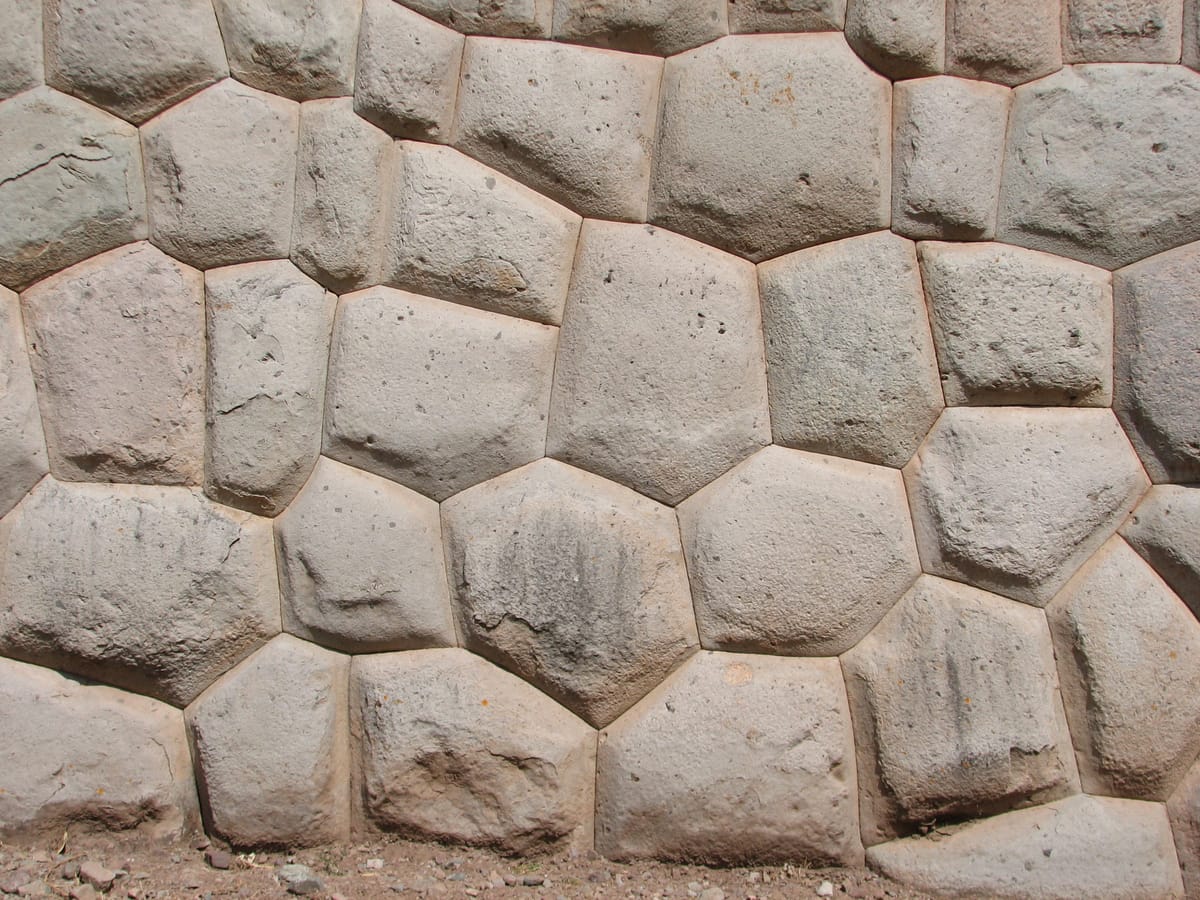
How did Inca masons, working with nothing harder than stone hammers and abrasive sand, cut and interlock dozens of many-sided andesite blocks into a wall so tight that a blade still cannot slip between the joints — and why lavish that level of craft on a wayside rest stop rather than a temple in Cusco itself?
Why this rating?
- Construction difficulty
- 3/5
- Method uncertainty
- 2/5
- Capability gap
- 3/5
- Open questions
- 3/5
Tarawasi's finely fitted polygonal andesite wall is largely explained by documented Inca stoneworking methods — hammerstone pounding, abrasive finishing, and repeated test-fitting — the same techniques experimentally replicated at other Inca sites, so the craft is demanding but not evidence of unknown methods. What stays genuinely open is the finer choreography of how this particular wall's unusually numerous, many-sided joints were sequenced and matched by eye, and the deeper occupational history and full ceremonial role of the site's ushnu and terraces, which remain thinly excavated compared with Cusco's major monuments.
Overview
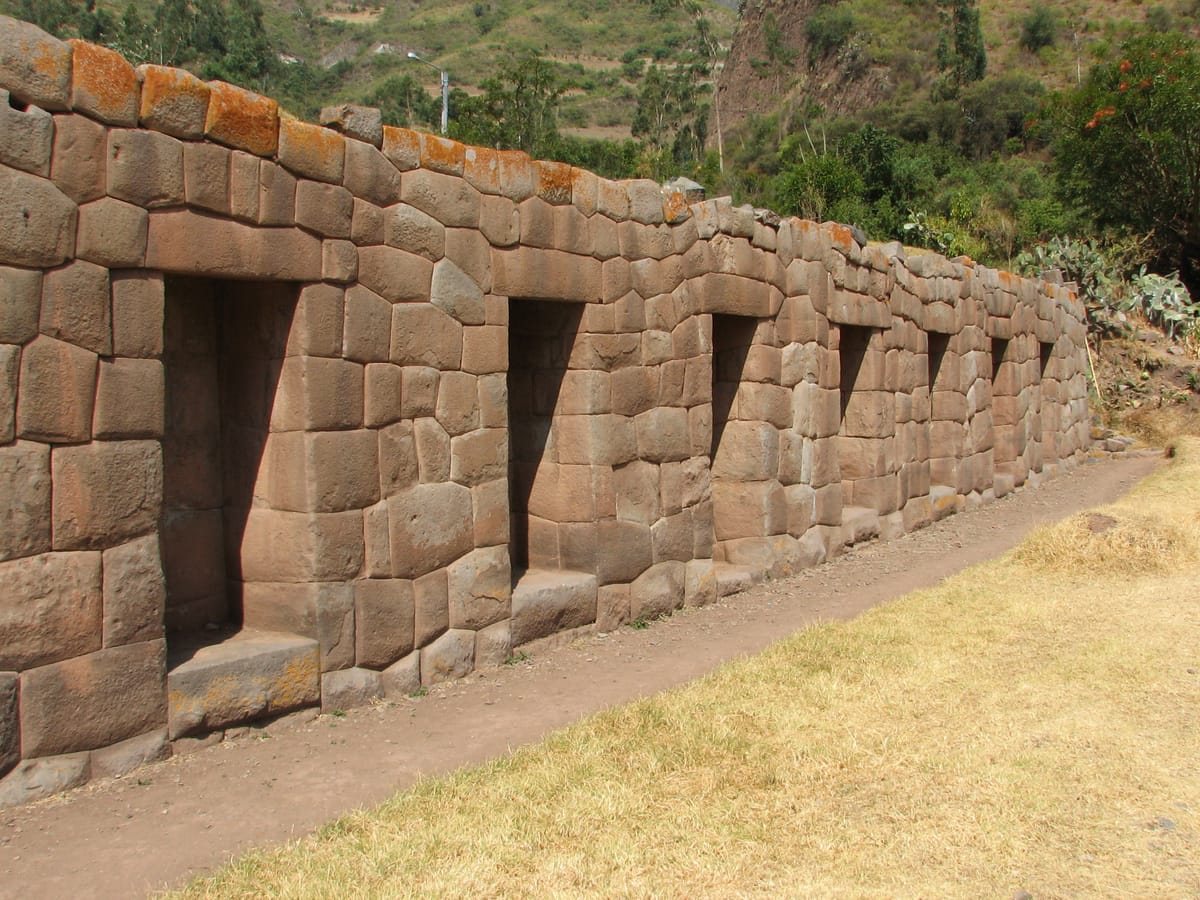
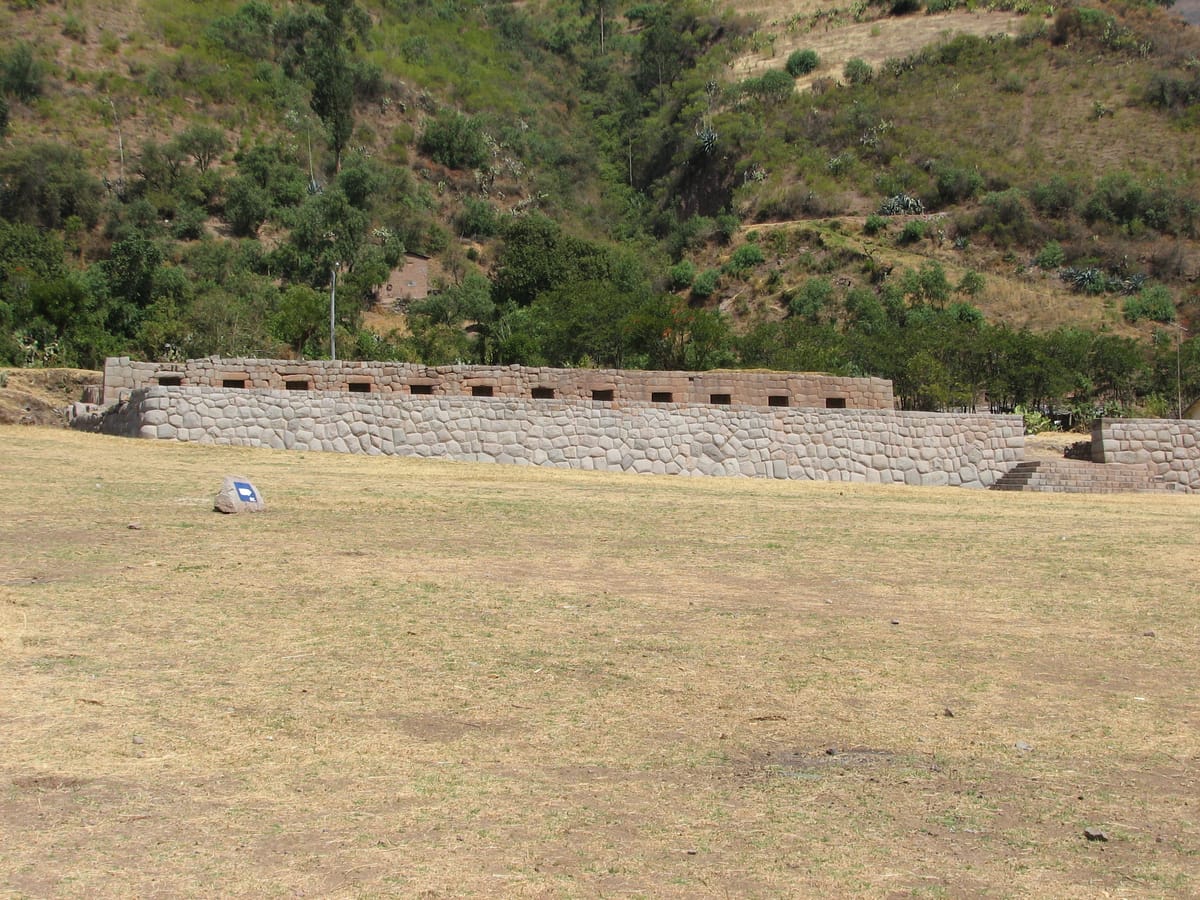
Tarawasi — also spelled Tarahuasi, and sometimes called Complejo Arqueológico de Tarawasi — is an Inca archaeological site in the Limatambo District of Anta Province, in Peru’s Cusco Region, about 72 kilometers west of the city of Cusco by road. It sits above the valley of the Río Blanco (also called the Río Colorado in older accounts), on what was once the royal Inca highway running out of Cusco toward Abancay, Andahuaylas, and ultimately the empire’s northwestern quarter, Chinchaysuyu. Tarawasi combined two roles common to major stops on the Inca road network: it functioned as a tambo, a waystation offering lodging and supplies to travelers, officials, and Inca armies moving along the road, and as a ceremonial center built around an ushnu, a raised ritual platform used for state and religious ceremony. The site is not large compared with Cusco’s great monuments, but it is architecturally significant out of proportion to its size: its principal retaining wall, built of finely dressed, many-sided andesite blocks fitted together without mortar, is widely regarded by Andean archaeologists as one of the finest surviving examples of Inca polygonal — or “cellular” — masonry anywhere in the former empire. A colonial-era hacienda, known locally as Sondor, was later built directly over part of the Inca structure, and its ruins now stand alongside the original Inca stonework at the site.
The Structure
Tarawasi is attributed to the reign of Pachacutec (Pachacuti Inca Yupanqui), the Inca ruler traditionally credited with transforming Cusco from a regional chiefdom into the seat of a rapidly expanding empire and with building much of the road, terracing, and waystation infrastructure that made that expansion administratively possible; his reign is conventionally dated to roughly 1438 to 1471 CE, placing Tarawasi within the Late Horizon period of Andean archaeology. The site’s core surviving feature is a long, finely built retaining wall supporting a series of ascending terraces arranged in a U-shaped plan, with a stepped section at the center connecting the lower and upper levels. The wall’s stone niches and trapezoidal window-like openings, some reaching roughly human height, carry carved decorative motifs that early visitors and later writers have described as floral in appearance — an unusually decorative treatment for what was, functionally, a rest stop and supply depot along a state highway rather than a temple in the capital. Above the terraces, the site’s ushnu platform marks Tarawasi’s ceremonial function: such platforms, found at major stops across the Inca road network, served as stages for ritual offerings, libations, and possibly the inspection of troops or officials passing along the route, tying local ceremony to the authority of the Inca state radiating out from Cusco. Like much of the Inca road system, Tarawasi was already in decline by the time of the Spanish invasion in the 1530s, and Spanish colonists subsequently built the Sondor hacienda directly against and partly over the Inca terracing, a common fate for Inca sites conveniently located along still-used travel routes. The site today is modest in visitor numbers compared with Machu Picchu or Sacsayhuamán, but it draws steady interest from specialists in Inca stonework and from travelers following the old road toward Abancay.
How Was It Built?
Tarawasi’s wall is built of andesite, a hard volcanic stone available in the region, dressed into blocks with markedly irregular, many-sided outlines rather than the simpler rectangular coursing used in more utilitarian Inca construction. Each block was pecked and ground until its edges matched the specific, equally irregular edges of its neighbors, producing joints so tight that no mortar was needed and, in the best-preserved sections, no blade can be slipped between adjoining stones. This polygonal, tightly interlocked style — sometimes called “cellular” masonry for its resemblance to organic cell walls — is the same broad tradition seen at Sacsayhuamán and Cusco’s finest Inca walls, and Tarawasi is frequently cited by Andean archaeologists as one of its most refined surviving examples, notable for the sheer number of sides on some of its blocks and the crispness of the fit. The building method reconstructed for Inca fine masonry generally, and inferred for Tarawasi specifically, begins with quarrying: blocks were split from source rock along natural fracture lines or by driving wedges into chiseled slots, then roughed to approximate shape at the quarry to reduce the weight hauled to the building site. Teams of laborers moved the roughed blocks using ropes, log rollers, and earthen ramps — no wheeled vehicles or draft animals capable of hauling stone were available to the Inca — and set them provisionally in place using lifting bosses, stone knobs left projecting from a block’s surface for rope slings, many of which survive on Inca walls elsewhere. Final shaping happened in place: masons used hard stone hammerstones to pound each block’s contact faces until they matched the block below and beside it, checking the fit repeatedly, grinding the surfaces smooth with sand and other abrasives, and removing the lifting bosses once a block was seated. This work was organized through the mit’a, the Inca system of rotational labor tribute that conscripted able-bodied subjects for state projects including roads, terracing, and construction — the same institutional machinery that raised temples in Cusco was turned, at Tarawasi, toward a wayside station on the road leading out of it.
The Mainstream View
Archaeologists studying Inca architecture treat the building sequence behind walls like Tarawasi’s as reasonably well understood in outline, even though no Inca engineering text survives to describe it directly. The evidence is physical rather than documentary: hammerstone impact scars are visible on the working faces of many Inca-cut blocks, and quarry sites and construction debris — including discarded hammerstones and stone chips consistent with pounding rather than sawing or grinding alone — have been recovered beneath and around Inca walls elsewhere in the Cusco region. Lifting bosses of the kind used to maneuver blocks into place survive on numerous unfinished or lower courses of Inca masonry, and experimental archaeology, notably Jean-Pierre Protzen’s field experiments replicating Inca quarrying and stone-dressing at Ollantaytambo, has demonstrated that hammerstone pounding alone, without metal tools, can produce the tightly fitted joints seen in Inca fine masonry within realistic timeframes for a well-organized labor force. The mit’a labor system is independently documented in Spanish colonial administrative and chronicle sources, giving historians a credible mechanism for mobilizing and provisioning the large, coordinated crews such construction required. Tarawasi’s specific attribution to Pachacutec’s reign rests on its architectural style — consistent with securely dated Late Horizon Inca construction elsewhere — and its position on a known segment of the Inca road system linking Cusco to Chinchaysuyu, rather than on an inscribed date, since the Inca had no writing system in the modern sense. None of this is contested within Andean archaeology: the consensus is that Inca masons, using stone and bronze tools, ropes, ramps, and abrasives, and organized through corvée-style state labor, were fully capable of producing Tarawasi’s wall without any technology beyond what is otherwise documented for the empire.
The Open Case
What remains genuinely unresolved about Tarawasi is not whether Inca masons could have built it — the mainstream account answers that convincingly — but the finer texture of how work at this particular wall was actually organized and executed, and how much of the site’s fuller history has yet to be recovered. Tarawasi’s blocks are unusually numerous-sided even by the standards of Inca polygonal masonry, and reproducing that outcome by hammerstone alone requires an enormous number of trial fittings, since each new block had to be pounded and checked against several irregular neighbors simultaneously rather than one straight coursing line. Experimental work has shown the technique is physically possible and even efficient once mastered, but it has not been carried out at Tarawasi itself, so exactly how the masons here sequenced their work, checked fit at height, and achieved such consistent precision across an entire wall face is inferred from general Inca masonry studies rather than site-specific evidence. The site has also received comparatively little formal excavation next to Cusco’s major monuments, leaving open questions about the full extent of the original complex beneath the colonial hacienda, the precise ceremonies once performed at its ushnu, and whether earlier, pre-Inca construction phases underlie the visible Late Horizon stonework, as has been documented at other Cusco-region tambos. Tarawasi’s precision has, unsurprisingly, made it a favorite illustration in popular “lost technology” claims about Inca stonework, sometimes paired with speculation about tools or methods beyond what the archaeological record supports. The grounded picture is more interesting than that speculation, not less: a state that could organize labor precisely enough to fit dozens of many-sided blocks into a mortarless wall at a rest stop, simply because the road demanded it, without needing any explanation beyond skill, patience, and extraordinary institutional discipline.
Sources
Gallery