Great Pyramid of Giza
How did Fourth Dynasty Egypt, without iron tools, pulleys, or the wheel, quarry, transport, and stack roughly 2.3 million stone blocks — some weighing over 50 tonnes — into a structure aligned to true north within a fraction of a degree, and which exact ramp or lifting method got the largest blocks into place?
Why this rating?
- Construction difficulty
- 5/5
- Method uncertainty
- 3/5
- Capability gap
- 3/5
- Open questions
- 3/5
Quarrying, transport, tools, workforce organization, and dating are all corroborated by papyri, graffiti, and settlement evidence, leaving only the specific ramp/lifting mechanism for the heaviest blocks and the exact surveying method genuinely unresolved amid an otherwise well-documented, state-organized project.
Overview
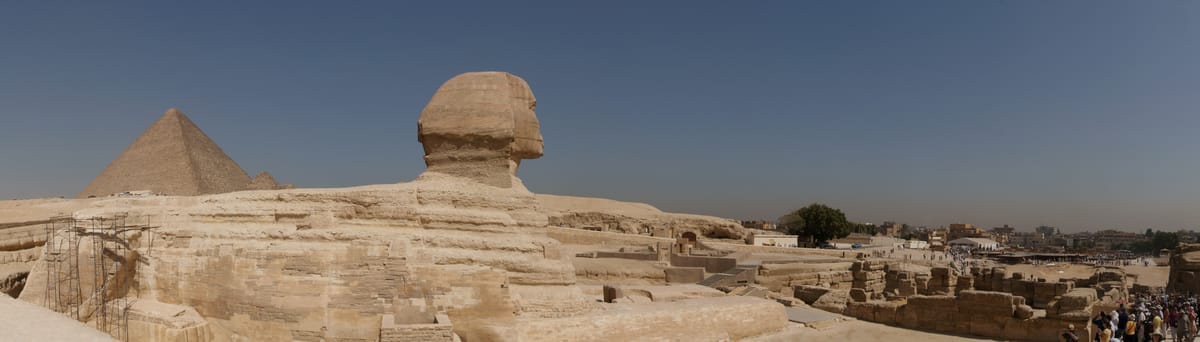
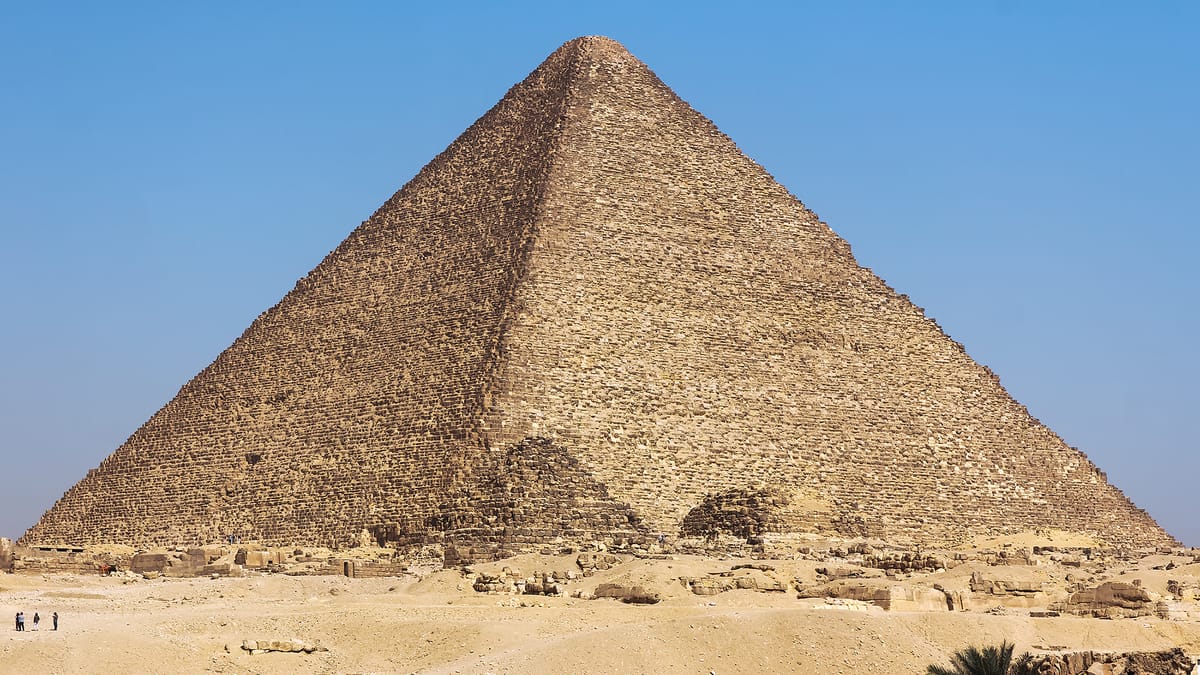
The Great Pyramid of Giza is the largest of the three pyramids on the Giza plateau on the outskirts of Cairo, Egypt, and the sole survivor of the traditional Seven Wonders of the Ancient World. It was built as the tomb of the Fourth Dynasty pharaoh Khufu (also known by his Greek name, Cheops), who reigned roughly 2589-2566 BCE, with construction generally dated to around 2600-2560 BCE. Originally rising to about 146.6 meters, the pyramid has lost some of its outer casing over the millennia and now stands about 138.5 meters tall, with a base roughly 230 meters on each side. It was the tallest structure built by human hands for nearly 3,800 years, a record unbroken until the completion of England’s Lincoln Cathedral spire in the 14th century CE. Built from an estimated 2.3 million blocks of limestone and granite, some weighing more than 50 tonnes, it stands as part of the Giza necropolis alongside the pyramids of Khafre and Menkaure, the Great Sphinx, and a field of smaller subsidiary tombs. Together with the pyramid fields at Dahshur and elsewhere, Giza was inscribed by UNESCO in 1979 as part of the World Heritage Site “Memphis and its Necropolis — the Pyramid Fields from Giza to Dahshur.”
The Structure
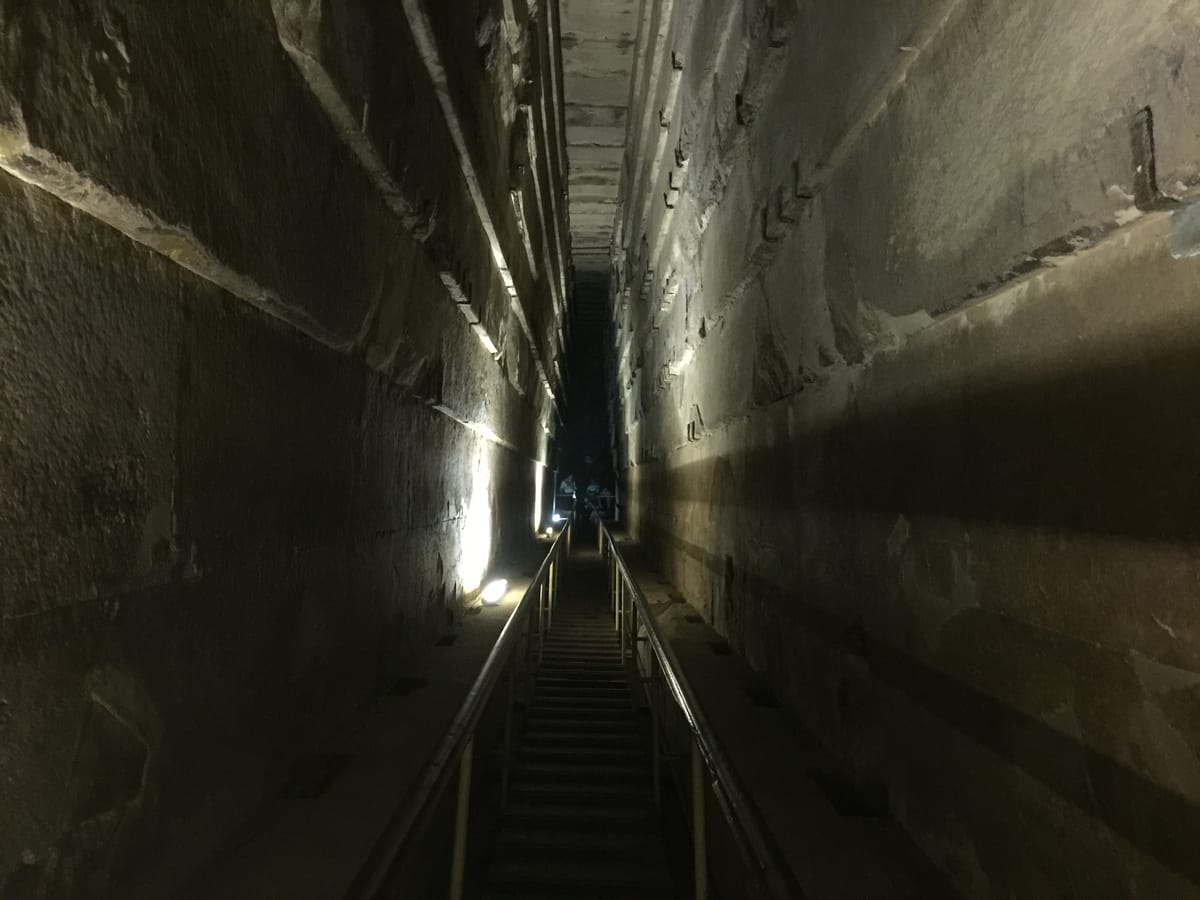
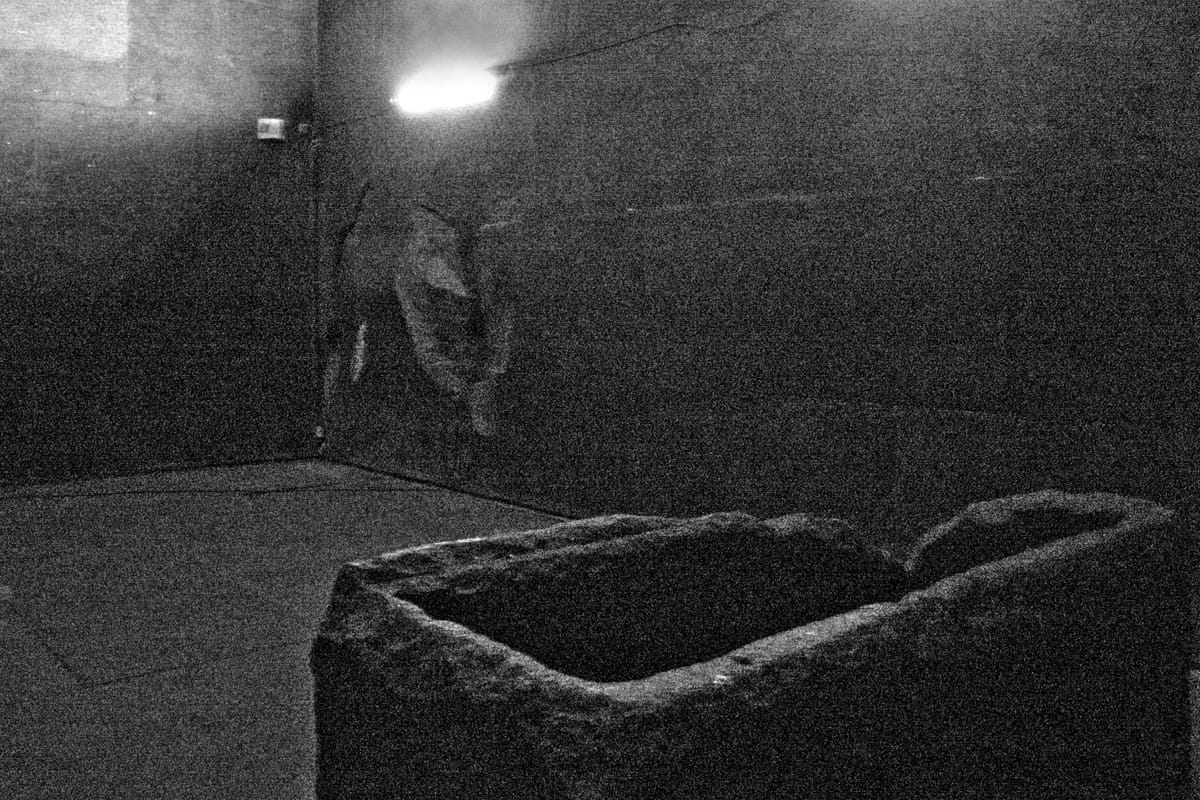
The pyramid’s core is built up in roughly 210 courses of roughly-hewn local limestone, quarried directly from the Giza plateau itself. It was originally sheathed in a smooth outer casing of fine white Tura limestone, quarried across the Nile and polished to a bright, reflective finish — almost all of this casing was stripped in later centuries for building material in Cairo, leaving today’s stepped core exposed except for a remnant near the base. Inside, the pyramid holds a compact but sophisticated network of passages and chambers: a Descending Passage leads to an unfinished subterranean chamber cut into bedrock; an Ascending Passage climbs to the so-called Queen’s Chamber and to the Grand Gallery, a soaring corbelled corridor roughly 47 meters long and 8.6 meters high that ranks among the finest stoneworking achievements of the ancient world; and above it, the King’s Chamber, built entirely of red granite hauled from quarries at Aswan nearly 935 kilometers to the south. Above the King’s Chamber sit five stacked “relieving chambers,” low granite compartments designed to redistribute the immense weight of the masonry above and protect the chamber’s flat roof from collapse — the uppermost has a pitched limestone roof that finally diverts the load outward. The pyramid’s base is level to within about 21 millimeters and its sides are aligned to true north with an average error of only about 3-4 arcminutes, a degree of precision achieved without magnetic compasses or telescopes. It was originally capped by a pyramidion, likely gilded, that has never been recovered.
How Was It Built?
Construction is attributed to organized crews of Egyptian laborers, not the enslaved masses of popular legend. Excavations led by Mark Lehner and Zahi Hawass uncovered a purpose-built workers’ settlement just south of the pyramids, complete with barracks, bakeries, breweries, and a large food-production infrastructure capable of feeding thousands; nearby cemeteries hold workers buried with honor close to the pyramids themselves, not the treatment expected for forced captive labor. Red-ochre graffiti left by work gangs deep inside the pyramid’s relieving chambers — never meant to be seen once sealed — name teams such as “Friends of Khufu” and record which crew and phyle were responsible for particular blocks, directly tying the construction to Khufu’s reign. Discovered in 2013 at Wadi al-Jarf on the Red Sea coast, the papyrus logbook of an official named Merer, the oldest inscribed papyrus yet found, records his crew of about 200 men ferrying Tura limestone by boat down the Nile and connecting canals to Giza for the pyramid’s casing — direct, dated administrative evidence of the supply chain in action during the final years of Khufu’s reign. Workers used copper chisels and saws, dolerite pounders, wooden and stone tools, levers, wooden sledges, and rope; a 2014 discovery of ancient text and a ramp at a gypsum quarry at Hatnub confirmed a technique in which sledges were hauled up ramps flanked by post-holes that let workers brace the loads, while other Egyptian tomb paintings show sledges pulled over ground dampened with water to reduce friction in sand. Blocks were floated on barges along the Nile and canal channels engineered directly to the base of the plateau, then dragged the final stretch on prepared causeways. Precisely how the largest, heaviest blocks were lifted up the pyramid’s face as it rose is the one link in this well-evidenced chain that Egyptologists have not settled.
The Mainstream View
Mainstream Egyptology has no doubt about who built the Great Pyramid, when, or in broad terms how: it is the work of Fourth Dynasty Egyptians under Khufu, dated by artifact typology, radiocarbon samples from mortar and organic material, and the internal graffiti naming Khufu’s work gangs, and constructed using the tools, transport methods, and labor organization described above. The workforce is estimated at somewhere between 10,000 and 30,000 people at any given time, drawing on a rotating national labor levy supplemented by permanent skilled crews of masons, engineers, and craftsmen, fed and housed by a state apparatus substantial enough to leave behind bakeries, granaries, and animal-butchery remains on an industrial scale. This picture is corroborated across independent lines of evidence — administrative papyri (the Merer diary), on-site graffiti, workers’ cemeteries and settlements, quarry marks at Tura and Aswan, and comparison with the well-documented building programs of earlier and later pyramids — which is why Egyptologists treat the identity of the builders and the overall organization of the project as settled, not speculative, questions.
The Open Case
What remains genuinely open is a narrower, technical question: exactly how blocks — including granite beams for the King’s Chamber weighing up to about 80 tonnes — were raised as the pyramid grew taller, since no ramp or lifting apparatus survives intact at full scale. Uvo Hölscher proposed a ramp zigzagging up the pyramid’s faces; Dieter Arnold argued for a single long straight ramp, partly built into the core itself; Mark Lehner and Zahi Hawass have favored a ramp spiraling around the exterior; and architect Jean-Pierre Houdin proposed an internal spiral ramp threading through the pyramid’s body, a thesis most Egyptologists, including UCL’s David Jeffreys, regard as unproven and overly complex. Each model explains some evidence — construction debris, ramp remnants at other sites, the mathematics of achievable slopes — while leaving other details unresolved, and it is possible more than one method was combined across the build. The precision of the pyramid’s alignment to true north and the levelness of its base likewise invite genuine questions about the surveying methods used, plausibly involving stellar observation and water-filled leveling trenches, though the exact procedures are inferred rather than directly documented. None of this openness extends to claims of alien builders or a vanished high-technology civilization: those ideas are not supported by any archaeological, textual, or geological evidence, and they are set aside here, not because the pyramid isn’t astonishing, but because the real evidence already points, consistently, to the ancient Egyptians who left their names, their tools, their bread ovens, and their graves at the foot of what they built.
Sources
- UNESCO World Heritage Centre — Memphis and its Necropolis, the Pyramid Fields from Giza to Dahshur
- Britannica — Great Pyramid of Giza
- Smarthistory — Pyramid of Khufu
- Wikipedia — Great Pyramid of Giza
- Smithsonian Magazine — What the World's Oldest Papyrus Can Tell Us About the Pyramids
- Ancient Origins — Beyond the Pyramid Ramp: Unravelling Egypt's Most Elusive Enigma
- National Geographic — Giza Pyramids
On screen
- The Pyramid You Can't Climb — In real life, Egypt guards the Great Pyramid against climbers. In Assassin's Creed Origins, scaling it is the whole point.
Gallery