The Temples Nobody Built
In India and Ethiopia, masons carved entire sacred buildings downward out of solid rock — roof first, floor last, with no way to undo a wrong stroke — four centuries and four thousand miles apart.
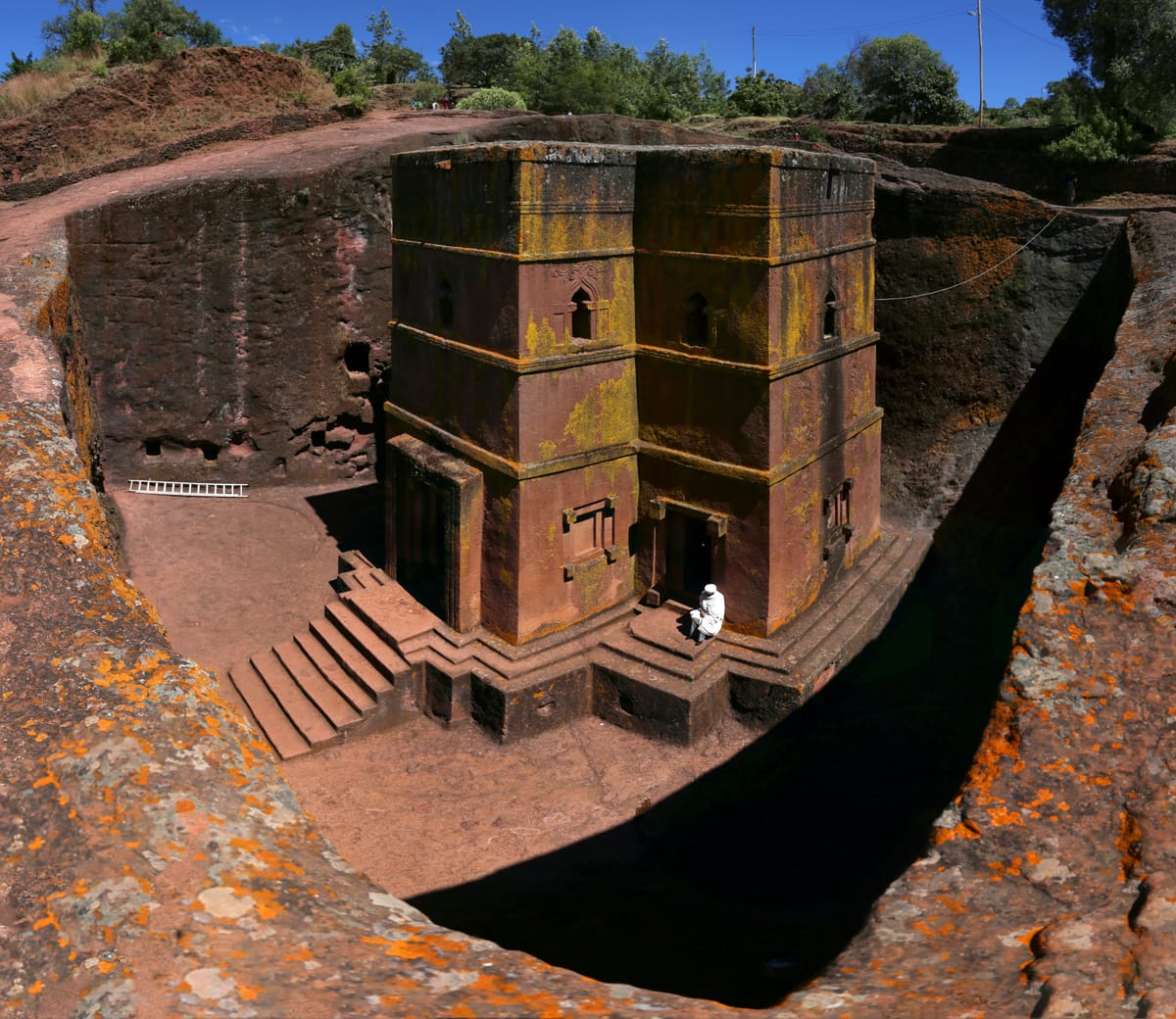
Stand at the rim of the trench at Lalibela, in the Ethiopian highlands, and look down: at your feet, cut twelve metres into the rock, is the roof of a church — a perfect Greek cross, Bete Giyorgis, sunk into the mountain rather than raised above it. There is no way to build this the ordinary way. Walls go up, a roof gets lifted onto them, and if the plan goes wrong you take down what you built and start again. Here nothing was ever added. A mountain stood on the spot, and then a church was what remained of it once everything else had been cut away, from the top down, with a single wrong stroke able to ruin a wall or a pillar forever, with nothing to patch it with. Four thousand miles west and three and a half centuries earlier, masons at Ellora, in India, had already stared down that same terror and made the same bet.
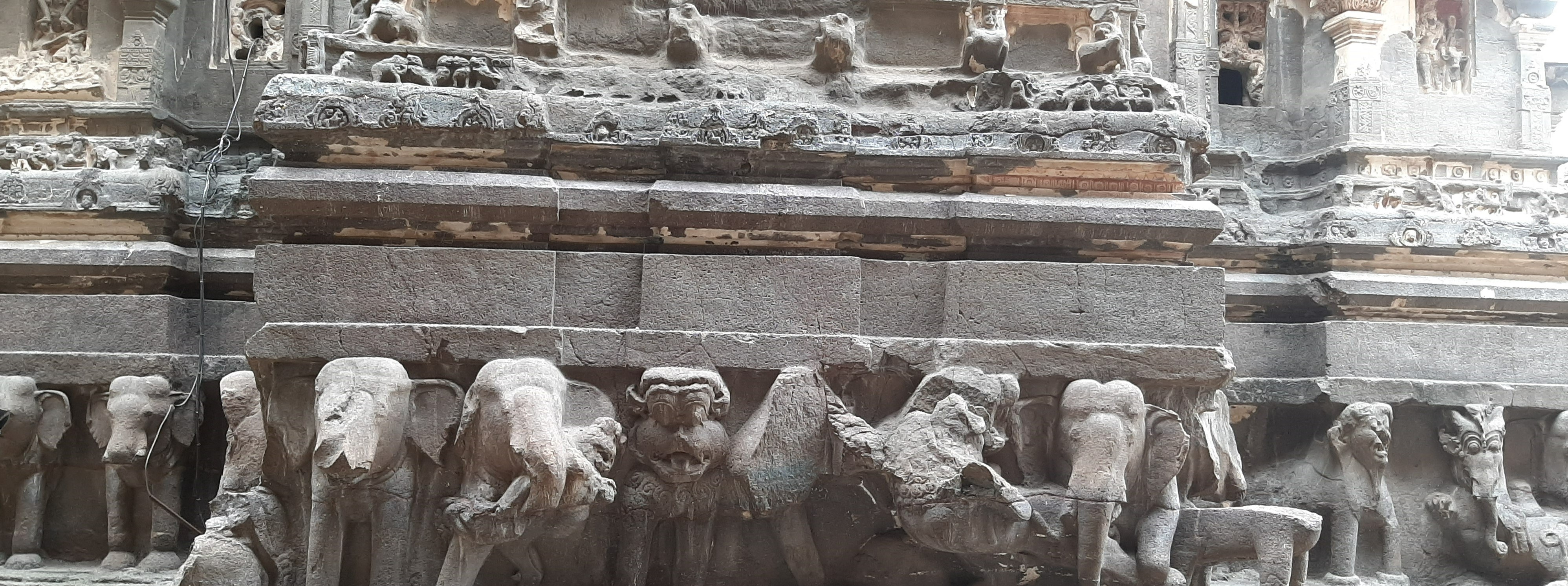
Kailasa’s builders, working for the Rashtrakuta king Krishna I in the 8th century, cut three deep trenches into a basalt cliff to isolate one colossal block, then carved it from the outside in and the top down until a two-storey temple emerged whole — its courtyard, its elephant-carved plinth, its freestanding gateway and shrines — some 200,000 tonnes of rock removed to reveal a building that was never assembled at all. Four centuries later, masons working for King Gebre Meskel Lalibela of Ethiopia’s Zagwe dynasty isolated blocks of volcanic tuff the identical way, then hollowed them in the identical forced order: roofline and cornices first, then upper walls, then windows and doors, then floors and inner chambers last — because only the rock not yet cut could bear a worker’s weight. Eleven churches rose like this, sunk together into one plateau as a “New Jerusalem” for pilgrims who could no longer reach the real one.
Ellora’s masons cut for Shiva; Lalibela’s cut for Christ. Rashtrakuta India and Zagwe Ethiopia never traded, never corresponded, never so much as knew the other existed. Yet both, faced with the same impossible arithmetic — a temple that had to be discovered inside a mountain rather than built beside it, with no undo — arrived alone at the identical method: start at the sky, and cut your way down to God.
Read the full studies: The Kailasa TempleRock-Hewn Churches of Lalibela