The First Draft You Can Build
Pharaoh hands you Imhotep's plan and tells you to raise the first pyramid. Assassin's Creed Origins turns up 2,600 years late and finds bandits living in it.
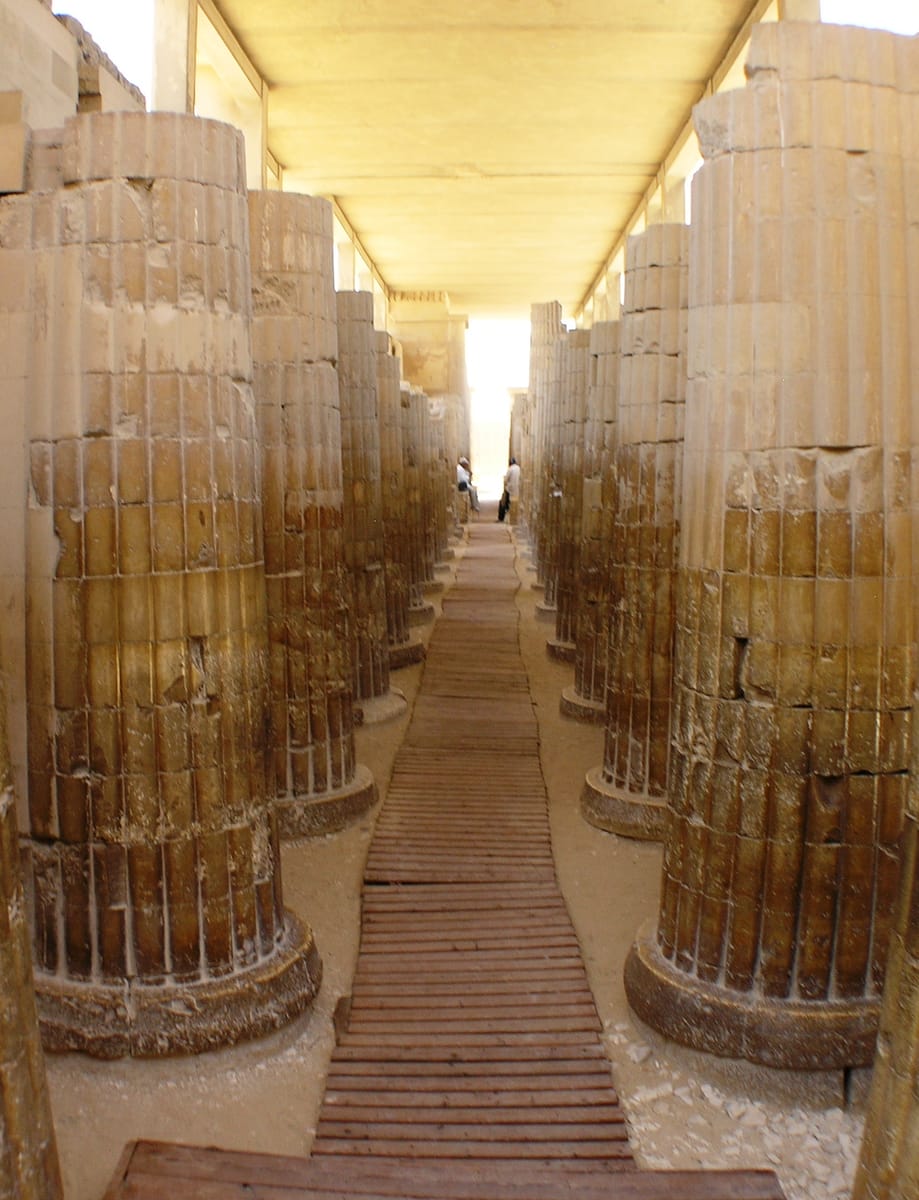
Every other pyramid has a template to follow. Djoser’s is the template, and it was worked out on site — a flat mastaba, then a wider one, then wider again, then four steps, then six, at least five revisions by masons discovering what stone could do while they were already stacking it. It is the only monumental building in Egypt that doubles as its own working drawing. Which makes it an awkward thing to put in a game, because a game has to know what it is building before you click.
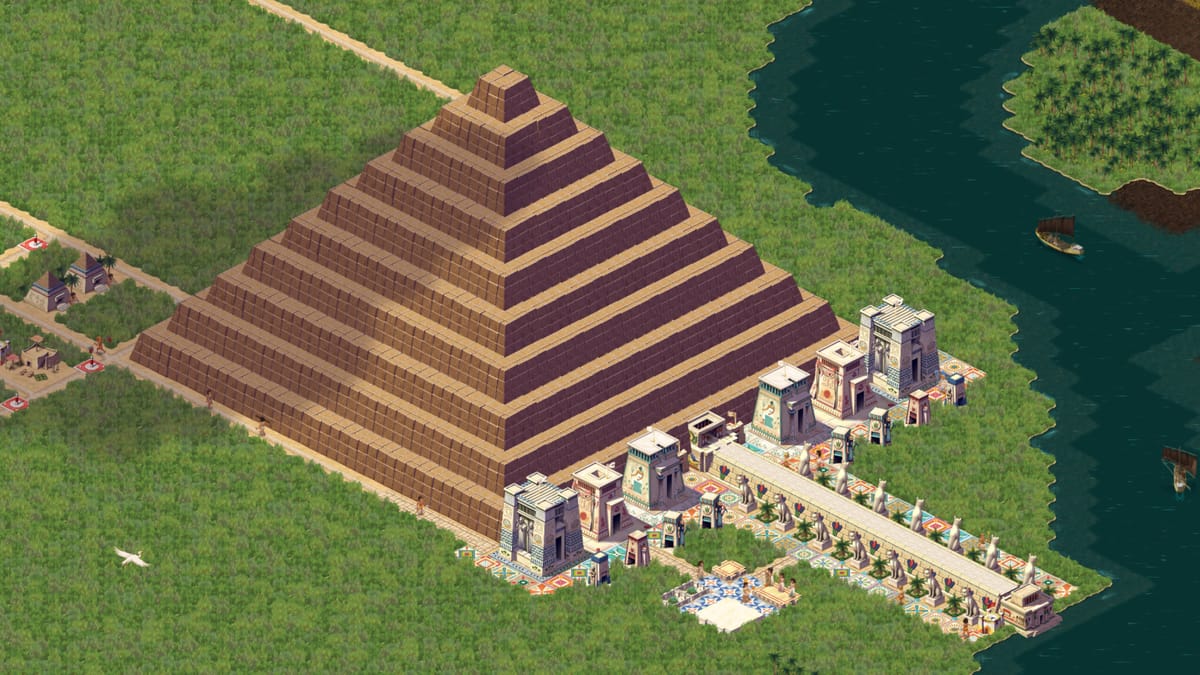
Pharaoh clicks anyway. The 1999 Impressions city-builder — remade by Triskell Interactive, published by Dotemu as Pharaoh: A New Era in 2023, which folds the old Cleopatra expansion into the base campaign for fifty-odd missions in all — reaches Saqqara as the ninth mission of the run and the second set in the Old Kingdom, the one the game titles The First Pyramid. The briefing isn’t narration. It’s a commission, and it’s signed: “I, the Pharaoh’s royal vizier Imhotep, have conceived a new form of sacred tomb for Pharaoh. Unlike the low mud brick mastabas of prior Pharaohs, this tomb shall rise toward the heavens, as if it were comprised of several mastabas, placed one on top of the other.” You are not Imhotep. You are the person who has to make his idea stand up.
The game is unexpectedly serious about how. Stepped pyramids are the second monument type Pharaoh unlocks — after mastabas, before true pyramids — which is the real architectural sequence in miniature. Before a single block is laid, your labourers strip the topsoil down to bedrock, cut grooves into it, flood them with water, drain them and pack them with rubble, a levelling method Egyptologists genuinely argue about. Then stonemasons lay the courses while the Carpenter’s Guild throws ramps up the growing faces, and the ramps come down when the last course goes on. It is a decent account of everything we understand about the build. What it cannot simulate is the only part that was unprecedented: Imhotep’s plan arrives in your inbox finished. The real one did not exist yet.
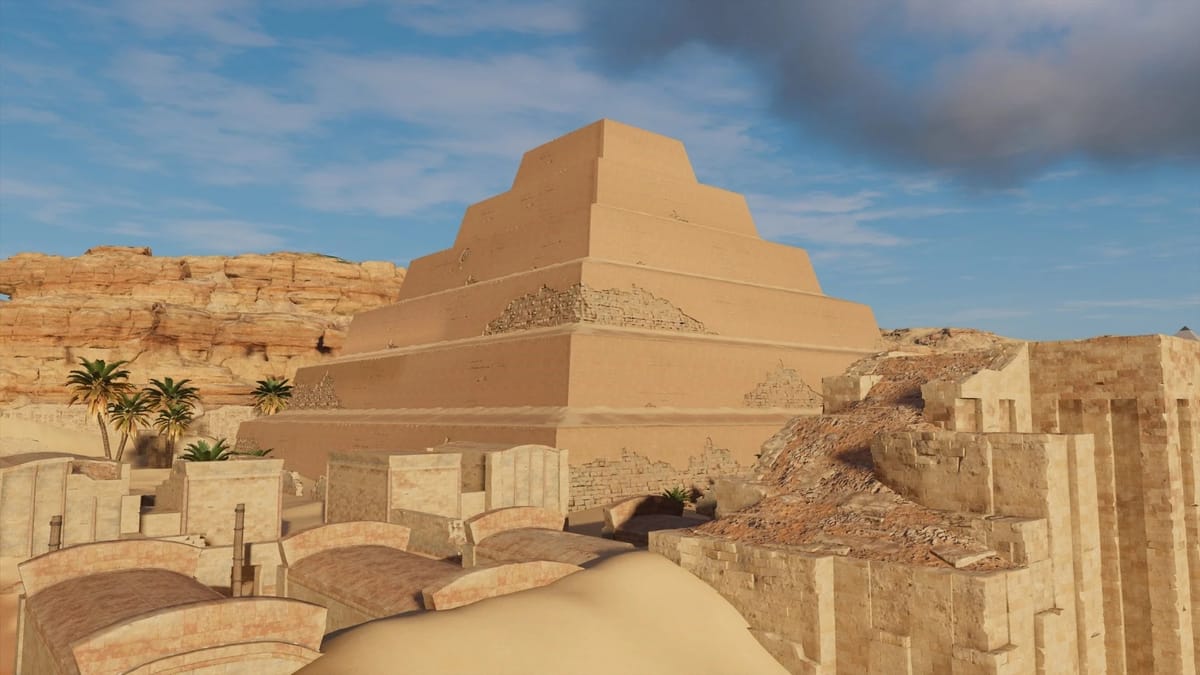
Assassin’s Creed Origins turns up in 48 BCE, by which time the answer has gone cold and Djoser has been dead longer than Ubisoft’s Egypt is old. Saqqara Nome carries the whole complex — the panelled enclosure wall, the colonnade of plant-stem columns, the court of festival chapels, the serdab with its viewing hole — and lets you climb the six tiers to a viewpoint at the top, Memphis spread out below. Several of the chapels have collapsed, and the game lets you see what was inside them: sand and rubble. They were always solid; they were stage scenery for a dead king. A ramp on the north side drops into rough galleries and one corridor lined with aquamarine faience tiles, the same imitation-textile decoration the excavators found down there. And the whole precinct has been taken over by bandits. Egypt’s first idea in stone, and by the time you arrive it’s a squat.
Read the full study: Step Pyramid of Djoser
Sources
- Impressions Games Wiki — Saqqara (Pharaoh), mission briefing and goals
- Impressions Games Wiki — Stepped Pyramid (monument type)
- Steam — Pharaoh: A New Era
- Wikipedia — Pharaoh: A New Era
- Assassin's Creed Wiki — Pyramid of Djoser
- Gamepressure — AC Origins: Tombs in Saqqara Nome walkthrough
- Wikipedia — Assassin's Creed Origins