Idjang Fortresses of Batanes
How did a small island people, working stone and volcanic rock with no metal-rich toolkit and no written record, cut and terrace whole rocky hills into fortress-citadels reached only by ladders that could be pulled up behind them — and were these first and foremost places to live, or refuges to survive being raided?
Why this rating?
- Construction difficulty
- 3/5
- Method uncertainty
- 2/5
- Capability gap
- 2/5
- Open questions
- 4/5
Shaping a natural rock outcrop into a terraced, hard-to-climb citadel is genuinely demanding earthwork, but it is not deeply mysterious: the builders worked relatively soft volcanic rock and existing landforms with stone and iron tools, and the defensive logic of a ladder-access hilltop is transparent. The higher score is for open questions, and it reflects thin scholarship as much as any anomaly — only a handful of the roughly two dozen known idjang have been excavated, precise construction chronology is bracketed by wide radiocarbon ranges, and the relationship between these forts and comparable fortified hilltops in Taiwan and the Ryukyus remains an open research question rather than a settled one. Capability gap is low: this is human island engineering, understudied, not unexplained.
Overview
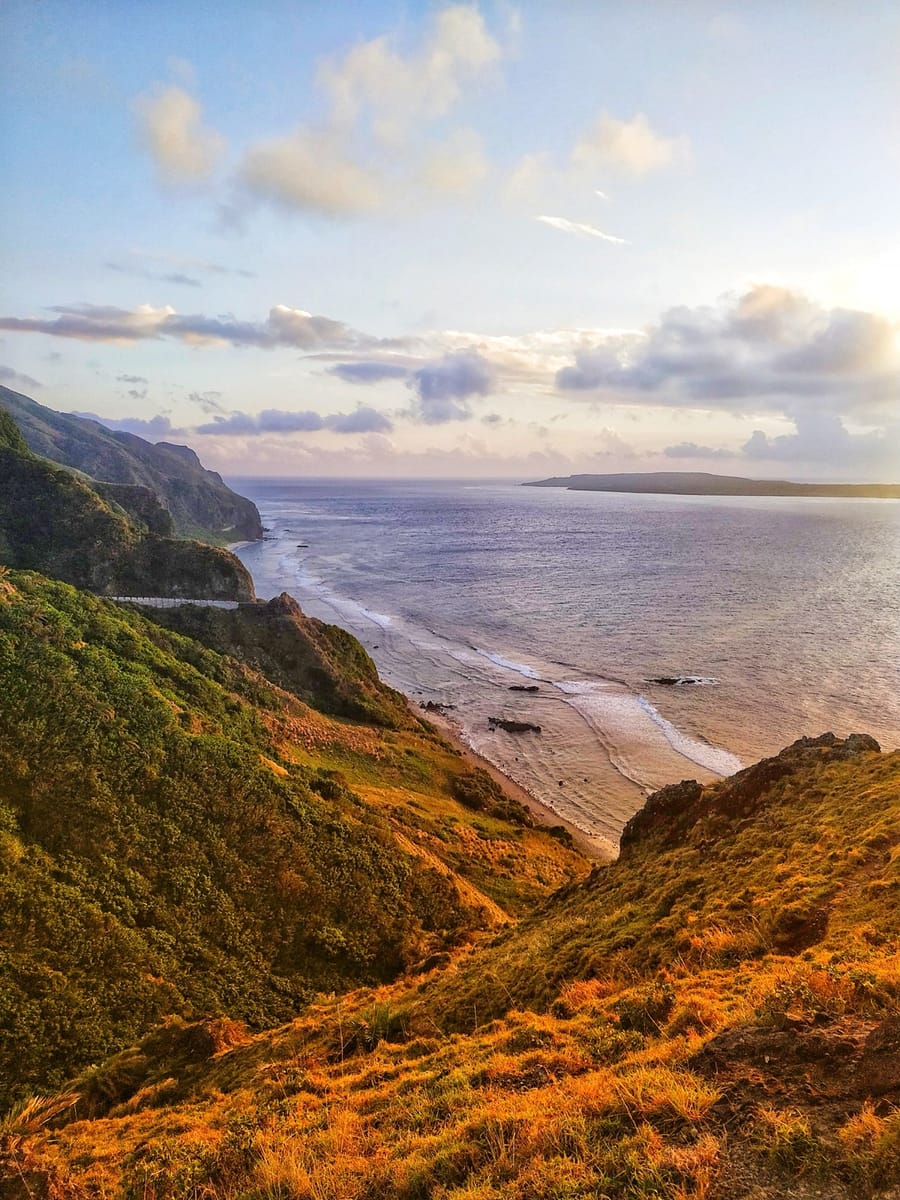
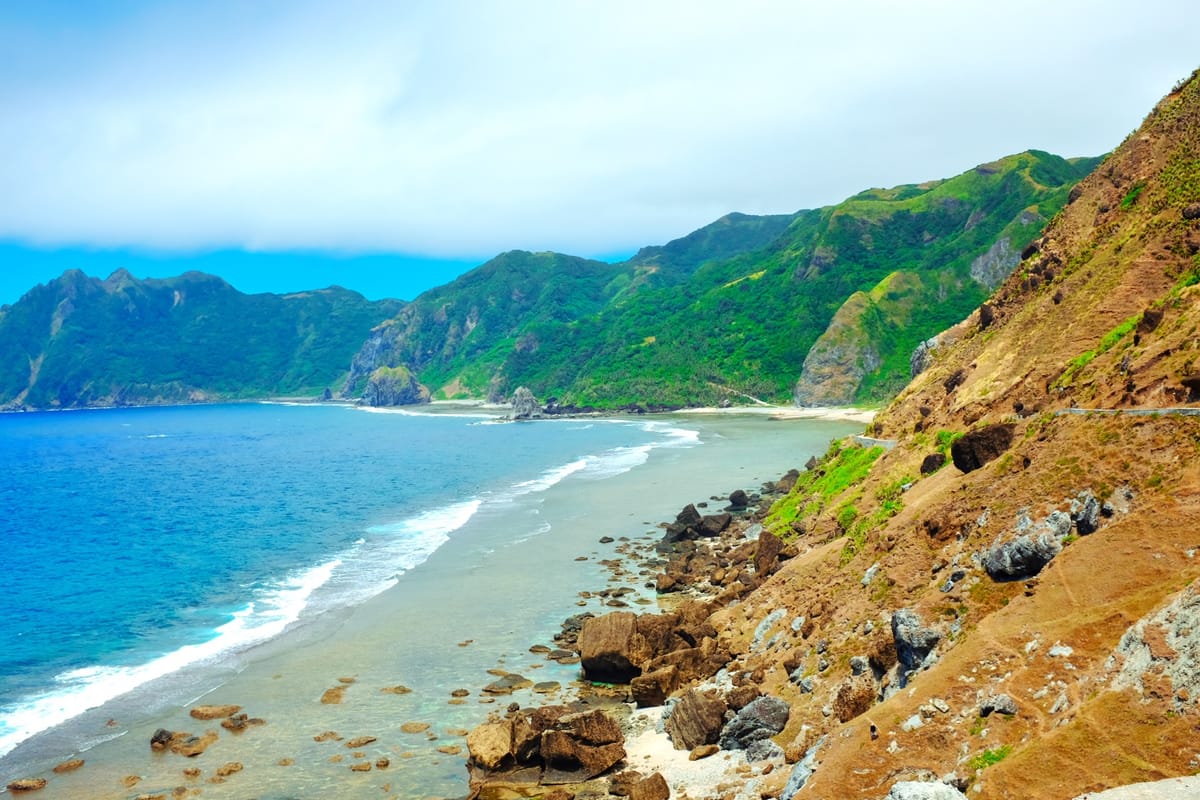
The idjang — also spelled ijang — are pre-Hispanic hilltop fortresses built by the Ivatan people on the islands of Batanes, the northernmost province of the Philippines. Batanes sits in the Luzon Strait, roughly halfway between the main Philippine island of Luzon and Taiwan, in some of the roughest seas in the archipelago. It is a small, wind-battered world of steep volcanic islands, and it lies squarely on one of the great migration corridors of human prehistory: the maritime route by which Austronesian-speaking peoples spread out of Taiwan and into the wider Pacific. Archaeology in the islands documents human settlement stretching back some four thousand years. Against that deep background, the idjang belong to a much later chapter. They are fortified citadels — the word is usually traced to the Ivatan root idi, in the sense of a refuge or place to withdraw to — built on prominent hills and rocky outcrops and used, on current evidence, roughly between the tenth and sixteenth centuries CE. At least twenty-one idjang sites have been documented across four of the islands: Batan, Sabtang, Itbayat and Ivuhos. They are, quite genuinely, among the least internationally famous major fortifications in Southeast Asia, and among the least fully excavated — which is part of what makes them interesting. The mainstream picture of who built them and why is reasonably clear; the details of exactly when, exactly how, and exactly how they connect to similar fortified hilltops elsewhere in the region are where the real gaps remain.
The Structure
An idjang is not a free-standing wall or a masonry keep. It is a landform that has been reshaped for defence. The Ivatan chose natural rocky prominences — outcrops and hills, often of volcanic tuff and other local stone — whose sides they cut, scarped and terraced so that the flanks became steep, near-vertical, and very hard to climb. The result is castle-like in silhouette: a defensible summit ringed by cliffs and stepped terracing, crowned by a comparatively flat top that served as the living and working area. On these summit platforms archaeologists have found post holes for timber-and-thatch houses, stone terraces and low retaining walls, and the ordinary debris of daily life. Access was deliberately difficult. Rather than a gate, an idjang was typically reached by ladders, which the occupants could pull up behind them when a threat appeared — turning the whole hill into a sealed refuge. Contemporary and later accounts describe defenders hurling stones down the cut slopes at attackers below, and stones still litter some of these hillsides. Sizes vary from site to site; the terraces at Savidug, for instance, are on the order of half a metre high, stepping down the slope toward a stream. The best-studied example is the Savidug Idjang on Sabtang Island, a triangular hill southwest of Savidug village; other named sites include an idjang at Chuhangin on Batan. Because so few have been excavated in detail, much of what can be said about the class as a whole is generalised from a small number of investigated hills. Popular descriptions sometimes call them “hundred-metre citadels” or the “castles of the Ivatan,” but the more careful point is that these are engineered hills: living settlements made almost impregnable by cutting the land itself into a fort.
How Was It Built?
The engineering of an idjang is impressive but not, in the main, mysterious. The essential act was earthwork on rock: selecting a naturally strong position and then cutting and terracing its sides to exaggerate the natural defences, while levelling and retaining the top into usable platforms. The volcanic rock and consolidated tuff of Batanes are workable materials, and the Ivatan of this period had stone tools and, increasingly, access to iron — Batanes was tied into regional maritime exchange networks, as the finds of imported ceramics attest. No feat of transporting colossal blocks over long distances is involved; the raw material of an idjang is largely the hill it stands on. What the work did require was organisation and sustained communal labour: quarrying and dressing stone for terrace walls, moving spoil, and maintaining the platforms and the timber houses on top. The defensive design is entirely legible — steep cut slopes, restricted ladder access, an elevated vantage over the sea and approaches, and a stock of throwing stones. In other words, the “how” of an idjang is a story of clever siting and patient labour rather than of lost or anomalous technology. The honest uncertainty is not whether the Ivatan could build these — plainly they did — but the finer points: how long each fort took to raise, how the labour was mobilised in such small island communities, and whether the forts were built in a single push or grew by accretion over generations. Those questions are hard to answer mostly because so few sites have been dug.
The Mainstream View
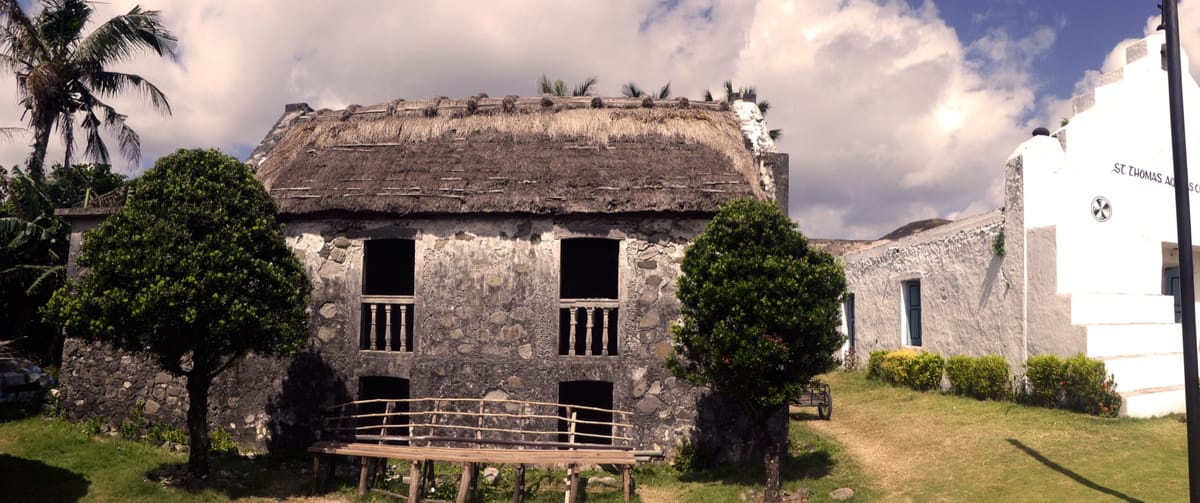
There is no serious dispute about authorship: the idjang were built and used by the ancestors of today’s Ivatan people, an Austronesian society long resident in Batanes. The forts were first surveyed archaeologically by a Japanese team from Kumamoto University in 1982, and then studied more intensively from 1994 onward by the National Museum of the Philippines under the archaeologist Eusebio “Bong” Dizon, later in collaboration with Australian researchers — notably Peter Bellwood of the Australian National University — as part of a broader Batanes Archaeological Project examining the islands’ role in the Austronesian dispersal. Excavation at the Savidug Idjang recovered earthenware sherds, glass beads, animal bone (including wild boar and deer), shell and coral, and imported Chinese greenware of roughly twelfth-century (Song-period) type; radiocarbon determinations from deposits associated with the hill span a broad late-prehistoric range, with settlement traces commonly placed between about the tenth and fourteenth centuries and dates extending toward the mid-second millennium. Nearby, the separate Savidug Dune Site preserves a much older Neolithic occupation, underlining that people had lived in this landscape for millennia before the forts were raised. The mainstream interpretation is that the idjang were primarily defensive settlements — fortified places to live and, when necessary, to take refuge during inter-community raiding and conflict in the centuries before Spanish contact. Their use came to an end under colonial rule: in 1790 the Spanish governor Guerrero ordered the Ivatan down from their hills to resettle in accessible lowland towns, where they could be governed, taxed and Christianised. Within a generation the idjang were abandoned as living places, and the Ivatan stone-building tradition carried on instead in the famous stone-and-lime houses of the lowland villages that still stand today.
The Open Case
What remains genuinely open about the idjang has less to do with anomaly than with how little has been excavated. Only a small fraction of the roughly two dozen documented forts have been investigated in any depth, and the workhorse chronology rests on a handful of radiocarbon dates with wide calibrated ranges — enough to say “late pre-Hispanic” with confidence, but not enough to pin down when idjang-building began, whether all the forts are broadly contemporary, or how long any one of them was occupied. The purpose is also less settled than a single label suggests: excavation shows the summits were lived-in settlements, not merely emergency bolt-holes, so the balance between everyday habitation and defensive refuge — and what, exactly, people were defending against, and how often — is still being worked out from thin evidence. The most tantalising open question is comparative. Batanes lies on the Taiwan-to-Luzon stepping-stone route of Austronesian expansion, and fortified or terraced hilltops are known from Taiwan and, in a different form and slightly later, in the gusuku citadels of the Ryukyu Islands to the north. Whether the idjang reflect a shared regional tradition of hilltop fortification, independent local invention driven by the same pressures of raiding and scarce defensible ground, or some mixture of the two is a real and unresolved research problem rather than a settled fact. None of this points beyond human hands: the idjang are a coherent, explicable achievement of a small, seafaring island people. The wonder here is partly in the achievement itself — hills cut into castles on some of the Philippines’ most exposed islands — and partly in how much of the story is still waiting, unexcavated, on those windswept summits.
Sources
- Wikipedia — Ijang
- Bellwood & Dizon, 'Archaeological Investigations at Savidug, Sabtang Island' (4000 Years of Migration and Cultural Exchange, terra australis 40, ANU Press)
- 4000 Years of Migration and Cultural Exchange: The Archaeology of the Batanes Islands (ANU Press, open access)
- Esquire Philippines — See the Marvelous Pre-Colonial Castles of the Ivatan in Batanes
- Yodisphere — The Ijangs: Archaeological Wonder in Batanes
Gallery